

 Español
 Deutsch
Custom corrugated plastic containers are reusable warehouse storage bins made from twin-wall polypropylene, engineered to fit your racks, carts, and picking workflow exactly. They solve storage problems that standard cartons and metal bins cannot: they keep the light weight of cardboard, add the durability and moisture resistance of plastic, and are manufactured to dimensions that match your facility. A warehouse manager watching cardboard totes collapse after one damp season understands the difference immediately. The key advantage is not the material alone; it is the ability to customize size, color, stacking behavior, and dividers so the container becomes part of your storage system instead of a compromise.
What Are Custom Corrugated Plastic Containers?
A corrugated plastic container is formed from twin-wall polypropylene sheets with a fluted interior, similar to cardboard but with greater structural memory and water resistance. These containers are cut, scored, folded, and welded into bins, totes, trays, and boxes for warehouse storage, internal transport, and order picking. Because the material is plastic rather than paper, it does not collapse when damp, does not harbor mold, and survives repeated handling cycles that destroy a standard carton.
The "custom" part matters as much as the material. A stock bin forces your shelving, pallet patterns, and picking process to adapt to its dimensions. A custom container adapts to your facility: shelf depth, cart width, pallet footprint, and label placement are all engineered backward from the workflow you already run.
Why Corrugated Plastic Outperforms Other Warehouse Materials
No single material is right for every warehouse, but corrugated plastic scores high on the combination of weight, strength, reusability, and hygiene. Warehouses across agriculture, automotive, food distribution, and e-commerce use it for the same reason: it holds up across temperature swings, damp floors, and repetitive handling. The table below shows how it stacks up against the common alternatives.
| Property | Corrugated Plastic | Cardboard | Wood | Solid Plastic Bin |
|---|---|---|---|---|
| Empty weight | Light | Light | Heavy | Medium to heavy |
| Moisture resistance | High | Very low | Low unless treated | High |
| Typical lifespan | 3–5 years or more | Single shipment | 2–4 years | 5+ years |
| Impact resistance | Good | Poor | Good | Excellent |
| Customization cost | Moderate | Low | High | High |
| Washability | Yes, with mild detergent | No | Difficult | Yes |
For warehouses that store food, pharmaceuticals, or temperature-sensitive products, the moisture resistance of corrugated plastic eliminates a whole class of problems that cardboard creates on a regular basis.
Customization Options That Matter on the Warehouse Floor
The customization choices that deliver the most operational value are the ones that affect how the container moves through your facility. Focus on these four areas before anything decorative:
- Dimensional fit that matches your exact rack and shelf geometry
- Stacking and nesting behavior for vertical storage and empty return
- Color coding by zone, product family, or order status
- Dividers, lids, and handles selected for your picking process
Dimensional Fit
A container that matches your shelf width increases storage density by 10 to 20 percent because it eliminates the wasted air space on either side of an undersized bin. Depth and height customization also reduces picking reach and improves ergonomics.
Stacking and Nesting
Stacking tabs, reinforced rims, and partial nesting determine how much product you store vertically and how many empty containers you handle at the start of a shift. Containers designed to stack one way and nest another save up to 30 percent of return-transport volume.
Color Coding
Assigning one color per zone lets pickers confirm the correct container at a glance and reduces mis-picks without adding scanning hardware.
Dividers, Lids, and Handles
Dividers keep mixed-item orders separate. Lids protect contents from dust and confirm that a container has not been opened in transit. Handles sized for gloved hands or automated grippers make a measurable difference in throughput. All of these are built into the same tooling run rather than retrofitted later.
Matching Container Design to Your Warehouse Workflow
Custom containers pay for themselves when they are matched to the actual movements in your warehouse, not to a generic storage category. Work through each zone separately.
Receiving and Putaway
Receiving containers need high visibility so checkers can verify contents immediately, plus stackability so putaway teams move multiple units at once. Clear polypropylene storage boxes with lids and handles deliver that visibility in a format that washes clean and stacks evenly on standard pallet racking.
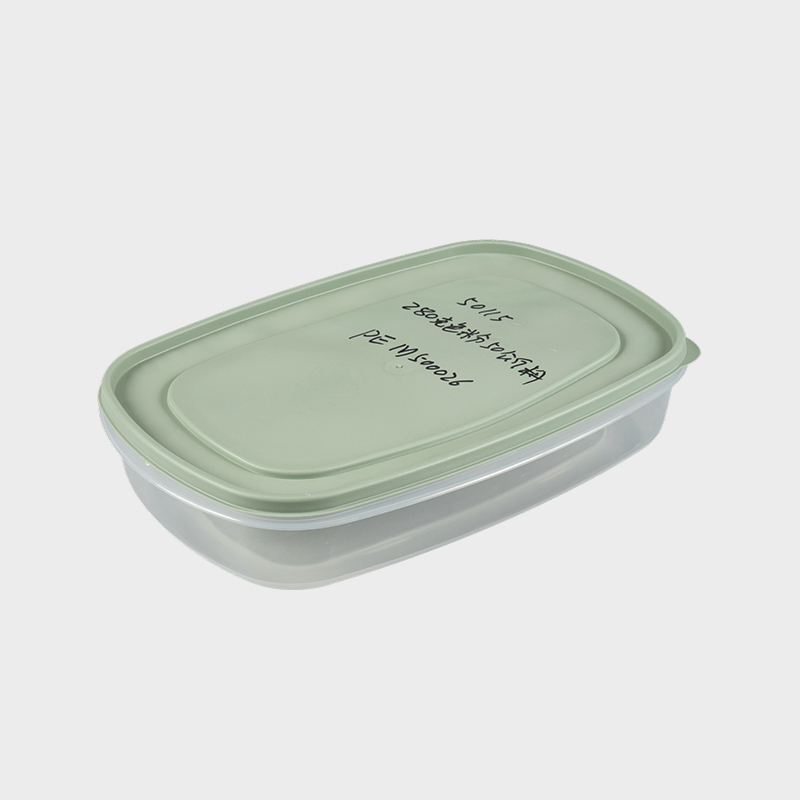 Transparent Lidded Storage Box with WheelsThis clear PP storage container with a latching semi-transparent lid and wheeled base suits receiving areas needing visibility, stackability, and easy movement during putaway and daily handling.View Product →
Pick and Pack
Picking containers should be sized to the order profile, not to the product. If your average order fits a 600 by 400 mm footprint, that should be your primary pick container. Dividers and four-side handles prevent picking errors and reduce hand fatigue over an eight-hour shift.
Bulk and Reserve Storage
Bulk storage containers need compression strength for high stacking, plus protection from dust and moisture so inventory stays clean for weeks. Large-format containers with latching lids and vented walls are common in this zone; they remain dimensionally stable across wide temperature swings without warping under direct load.
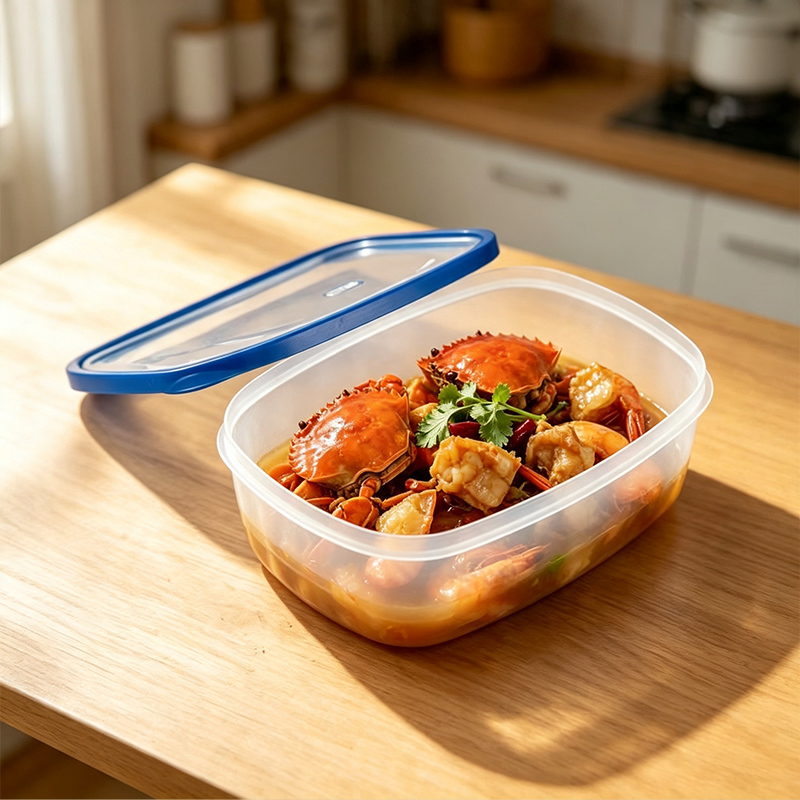 Large Rectangular Food Storage Containers with Vented LidsThis two-pack of high-capacity PP containers with overmolded TPR lids offers airtight sealing and stable stacking, making it suited for bulk or cold-environment storage where moisture resistance is critical.View Product →
Cold Storage
Cold environments punish most materials. Cardboard absorbs condensation and loses stacking strength. Wood becomes heavy and brittle. Corrugated plastic stays dimensionally stable, does not soak up moisture, and resists cracking at low temperatures better than many solid plastics.
Returns and Reverse Logistics
Returns areas benefit from containers that stack when full and nest when empty. Returned goods are frequently dusty or wet, so a washable container beats a disposable one. Lightweight plastic baskets and tote crates handle this loop without adding weight to the return shipment.
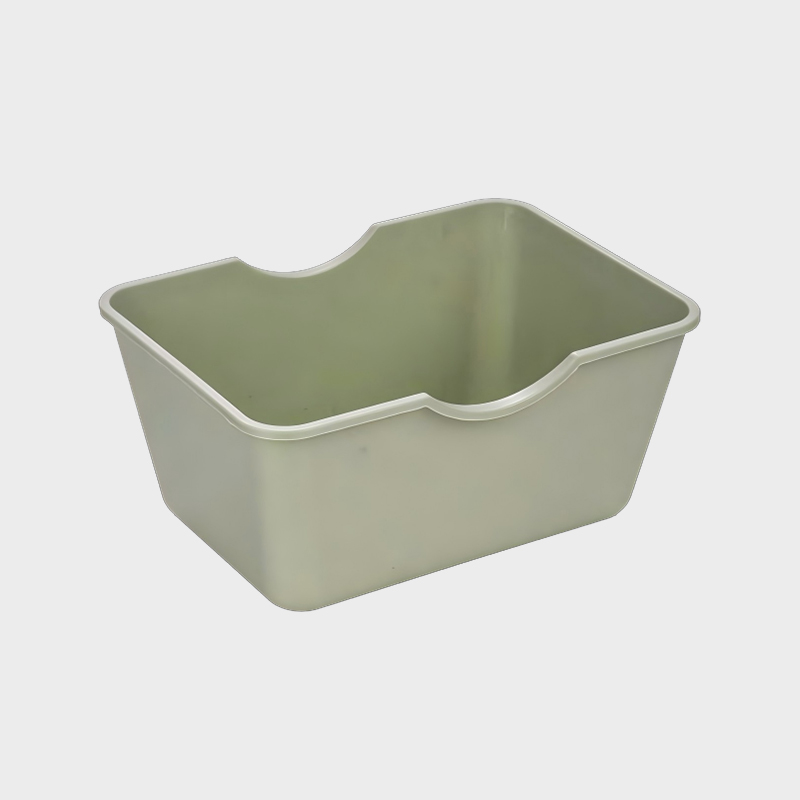 Lightweight Stackable Plastic BasketsSmall, sturdy PP baskets with a 1000 ml capacity and nesting-friendly stackable design are practical for returns loops or organizing small items without adding weight or cleaning hassle.View Product →
Food Safety and Hygiene Considerations
For warehouses handling food or pharmaceutical products, the hygiene profile of the container matters as much as its strength. Corrugated plastic is non-porous, resists moisture absorption, and cleans with mild detergents, which makes it compatible with common food-grade handling practices. Cardboard cannot make that claim. If the container will contact food directly, specify food-grade polypropylene and ask your supplier for material compliance documentation.
Cost and ROI of Custom Corrugated Containers
A custom corrugated plastic container costs more than a cardboard box at purchase, but total cost of ownership is usually lower within the first year. A tote used five days per week is handled, stacked, and moved hundreds of times during its service life. Cardboard is replaced continuously. Wood needs repair or chemical treatment. Solid plastic lasts longer but adds weight, which raises fuel cost and handling strain.
Track your ROI against these factors:
- Replacement purchases eliminated
- Product damage avoided from collapsed boxes
- Picking productivity gained from correct sizing
- Space utilization gained from rack-fitted dimensions
Warehouses that measure those numbers often find the custom container pays for itself in four to nine months.
Sourcing Custom Containers: What to Ask a Manufacturer
A reliable plastic manufacturer should move from your dimensional brief to a sample quickly, then scale to full production without quality drift. Ask about tooling cost and how it is amortized, minimum order quantities, and the supplier's ability to absorb demand spikes.
Production depth matters. A supplier that invested in additional manufacturing capacity can keep lead times stable when your volume grows. Documented capacity expansion is a useful signal; ask the sales engineer about current utilization and scheduling.
Before approving tooling, request dimensional tolerance checks and a pre-production sample. If you are new to specifying custom plastic containers, walk through the specification with the manufacturer to clarify which options create real operational value and which ones simply add cost.
Frequently Asked Questions
Are corrugated plastic containers strong enough for heavy warehouse use?
Yes, when wall thickness and flute direction are engineered for the load. Standard twin-wall sheet handles moderate loads; heavy-duty constructions with thicker walls and reinforced rims support demanding stacking loads over a service life of several years.
Can custom corrugated containers be used with automated warehouse systems?
Yes. Size, bottom profile, and surface friction can be customized for conveyors, robotic grippers, and automated-guided vehicles. Specify the automation interface during the design phase so the container dimensions match your equipment tolerances.
How do I choose between corrugated plastic and solid plastic bins?
Choose corrugated plastic when weight, price, and moisture resistance are your priorities and loads are moderate. Choose solid plastic when loads are very heavy, stacking heights are high, or the container is exposed to aggressive cleaning chemicals.
What information do I need to request a quote?
Provide external dimensions, internal dimensions, stacking load, maximum gross weight, whether lids and dividers are needed, your operating temperature range, and annual quantity. The more precisely you describe your racks and handling process, the more useful the manufacturer's recommendation will be.