Ningbo Panfeng Mould Plastic Co., Ltd. manufactures food-grade plastic cups, plates, shot glasses and tumblers at its Ningbo production base in China. The range covers stemmed wine-glass cups for banquets, thickened PET drink cups for cold beverage service, PS shot and wine glasses for party packs, stackable PP tumblers up to 1000 ml, and reinforced plates and trays for catering and sample display. Mould development, moulding, decoration and packing sit inside one production system, so a new shape and its packaging are qualified together rather than sourced from separate workshops.
Since 2016 we have run OEM and ODM programmes for customers in more than 90 countries and regions, working with PP, PS and PET as standard food-contact resins and adjusting wall section, rim geometry and decoration to the way each item is actually served.
As a Plastic Cup & Plastic Plates Manufacturer, we match product configuration to the application, operating limits, interfaces and acceptance criteria defined for each project.
Each family below is produced on the same food-grade discipline and can be ordered as a standard item or rebuilt around a private shape, capacity or print. The Plastic Cups & Plastic Plates manufacturer programme is a full category in our catalogue, not an accessory line to other packaging.
| Family | Resin | Format | Primary use |
|---|---|---|---|
| Stemmed wine-glass cup | Rigid food-grade PS / PET | Crystal-clear stemmed profile | Weddings, banquets, bar service |
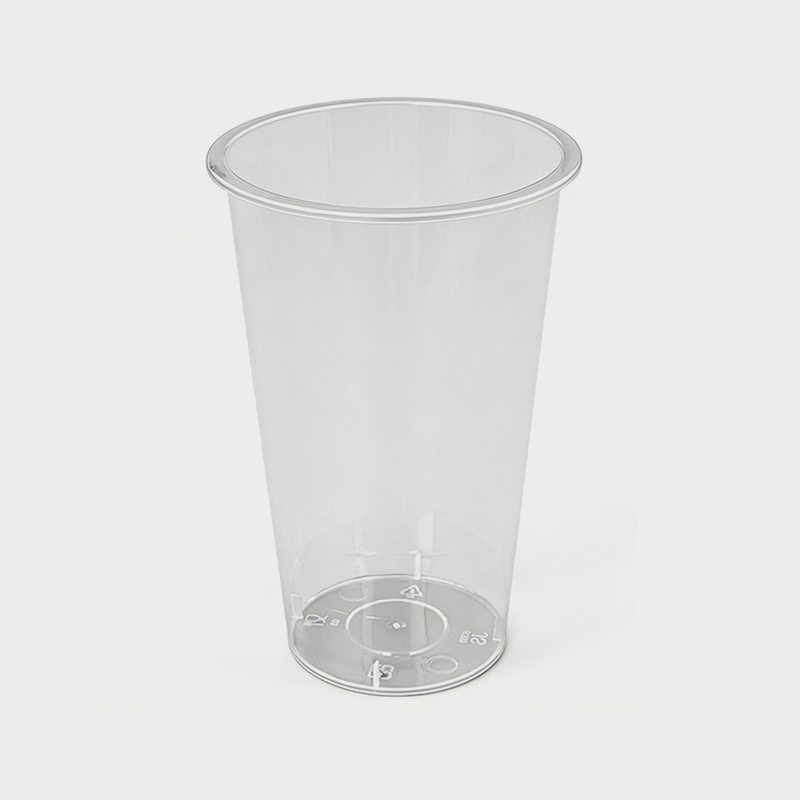
| Smooth transparent cup | Thickened PET | Rolled rim, 100% recyclable | Juice, iced coffee, soft drinks |
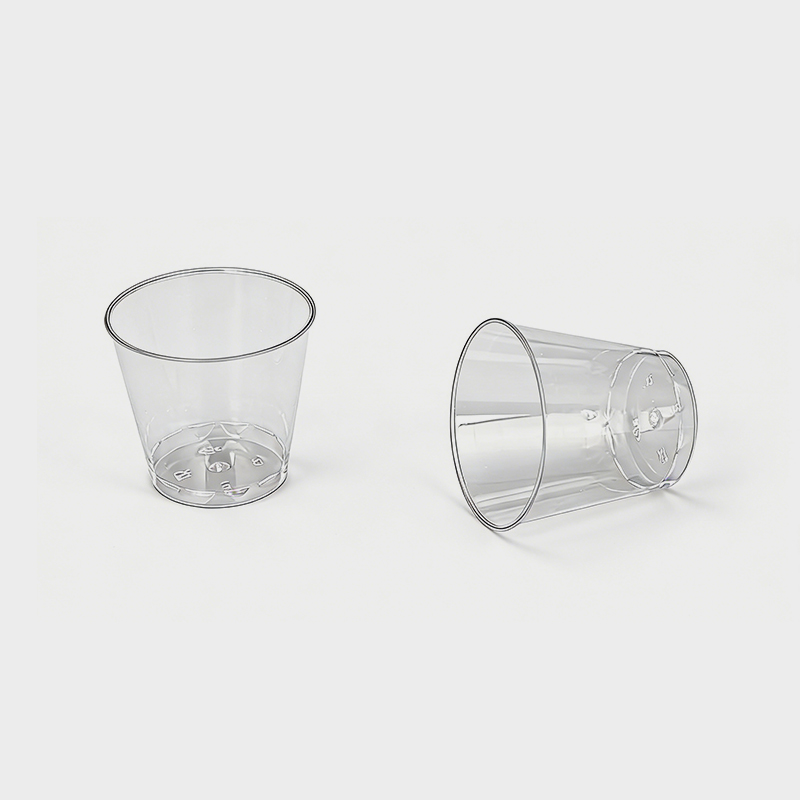
| Shot and wine glasses | PS | 60 ml shot, multi-pack sets | Parties, bars, tasting flights |
| Stackable PP tumbler | PP | Up to 1000 ml, heat-transfer print | Bubble tea, iced beverages, retail |
| Plates and serving trays | PP / PS | 15-30 cm, reinforced edge | Buffets, catering, sample display |
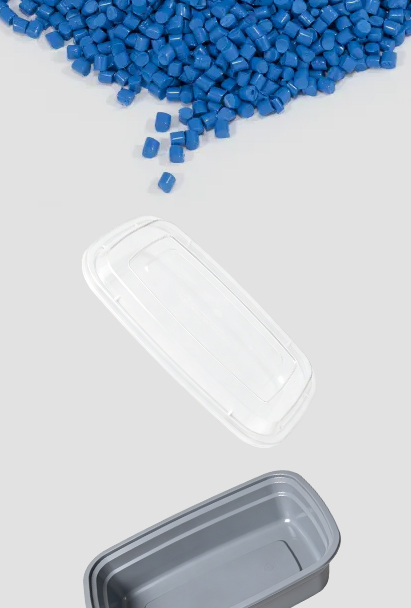
PP and PS are not interchangeable. PP holds hot drinks and takes microwave reheating; PS gives glass-like clarity at a lower unit cost but stays in the cold and ambient range. PET is chosen where a thick, fully transparent wall and strong crack resistance matter more than heat.
Upper service temperature by resin
Relative clarity by resin, indicative comparison
Lightweight cups and plates that stack tightly into delivery bags and reduce transport weight against ceramic or glass tableware.
Break-resistant mouldings for picnics and barbecues, where washing facilities are not available.
Printed themes and logos on cups and plates, including stemmed wine-glass cups for toasts and receptions.
Single-use portion control for school, hospital and care-home catering, cutting cross-contamination risk in shared dining areas.
Transparent cups and plates that show colour, layers and bubbles for bakery counters, tastings and supermarket sampling.
Multi-packs such as 6-pack wine glasses and 20-pack shot glasses, with private-label sleeves and mixed cartons.
Cups are produced by precision injection moulding where uniform wall section, structural strength and grip feel matter; thermoforming handles thin-wall lightweight plates and high-volume flatware at lower unit cost. Both routes run on the same food-grade material handling and traceability system.
Incoming resin is inspected and batch-recorded before it reaches a machine. Wall thickness, clarity, rim finish and stack height are checked during the run, and finished goods are inspected against the approved sample before packing. Where a destination market requires food-contact documentation, we develop the item to meet those FDA and LFGB requirements and supply the corresponding test reports.
| Project input | What it fixes in the build |
|---|---|
| Serving temperature and food type | PP, PS or PET resin and the wall section |
| Capacity or portion size | Cup volume 150-1000 ml, plate diameter 15-30 cm |
| Annual volume and order pattern | Mould cavitation, tooling route and production scheduling |
| Grip feel and rigidity target | Wall thickness, rim profile and rib reinforcement |
| Brand and decoration artwork | Colour matching, print method and artwork placement |
| Packing and shelf presentation | Multi-pack count, carton grade and protective inner packing |
| Destination market and shipping route | Declaration format, pallet build and delivery scope |
Yes, within the resin limit. Our PP cups work from -20 °C to 120 °C and are microwave-safe, which covers hot beverages and reheated food service. PS cups are rated 0 °C to 70 °C and are intended for cold drinks, desserts and display rather than hot filling.
Standard cup capacities run from 150 ml to 1000 ml, including 60 ml shot glasses, and plates and trays from 15 cm to 30 cm. Both dimensions can be moved within tooling limits, and the Recyclable Smooth and Transparent Food Grade Plastic Cup shows the thickened rolled-rim construction used for cold beverages.
We do. Pilot and market-test volumes are handled alongside large runs involving millions of pieces, and production lines are re-scheduled as forecasts change. Customization covers colour, logo, special capacity or size, unique shape design and packaging.
Colour matching, LOGO printing, heat-transfer print, in-mould labelling and full pattern artwork are available. Banquet and event ranges such as the Food Grade Transparent Wine Glass Disposable Plastic Cup are frequently printed with a theme or brand mark so the table setting carries the identity of the occasion.
Every batch passes incoming resin inspection, in-process dimension and appearance checks, and a final inspection against the confirmed sample. Printed pieces are packed face-up or separated to avoid pattern wear, and cartons are built for stacking and transport. Cups and plates should be stored cool and dry, away from direct sunlight and heat, to prevent ageing and deformation.
Ningbo Panfeng Mould Plastic Co., Ltd. is a OEM & ODM Plastic Cup & Plastic Plates Manufacturer and Disposable Plastic Tableware Factory, committed to providing customers with high-quality plastic products that reflect environmental responsibility and sustainable manufacturing. We strive to become a leading and trusted brand in the industry.









 Español
 Deutsch