

 Español
 Deutsch

For plastic containers for food storage, the best choice is a food-grade PP or PET container with a tight lid, clear sides, and a size that matches how you store food. That answer is simple, but the details decide whether the container keeps food fresh, survives the dishwasher, or leaks in a lunch bag.
Food storage containers are rigid or semi-rigid plastic boxes, bowls, tubs, and trays used to hold food in the fridge, freezer, pantry, or during transport. Buyers compare three things: the plastic grade, the lid system, and the capacity. A container that is perfect for dry rice may be a poor choice for hot soup, and a cheap set that stacks neatly may fail at the hinge or gasket after a few months.
Food-grade plastic is a material claim and a compliance claim
Food-grade plastic is not one material; it is a plastic grade that meets food-contact rules for the intended use, supported by migration testing and clear material documentation. A supplier can mold a neat-looking box from the wrong grade and still call it “plastic,” so the buyer needs to check the resin, the additive package, and the test report.
Most food storage containers use one of four families. Polypropylene (PP) is the workhorse for leftovers, meal prep, and microwave reheating because it tolerates heat well and resists staining. Polyethylene terephthalate (PET) is clearer and works well for cold display, but most PET containers are not designed for microwave use. Polyethylene (PE) is flexible and tough, often used for lids and freezer-safe parts. Polystyrene (PS) is rigid and inexpensive, but it is a poor fit for hot food and oily dishes.
| Material | Typical heat range | Clarity | Best use | Watch-outs |
|---|---|---|---|---|
| PP | About 100–120°C; microwave-safe only when labeled | Translucent to clear | Leftovers, meal prep, soup, dishwasher cycles | Oily foods can stain; check lid resin |
| PET | Lower heat tolerance; avoid hot fill and microwave | High clarity | Cold display, dry goods, retail packaging | Can deform with heat; not for boiling |
| PE | Moderate; depends on density | Opaque to translucent | Lids, freezer parts, flexible seals | Can soften in hot water; less rigid |
| PS | Low heat tolerance | Rigid and clear | Cold foods, dry goods, disposable trays | Cracks under stress; unsuitable for hot oil |
“BPA-free” is useful but incomplete. A container can be BPA-free and still be unsuitable for hot food if the resin or additives are not rated for that temperature. For procurement, ask for the food-contact declaration, the migration test summary, and the recommended maximum temperature in writing.
Five checks matter more than price
The five checks that decide whether a plastic food container works are lid seal, wall thickness, size match, temperature range, and documented food-contact compliance. Price matters, but it is a result of those five choices, not a substitute for them.
- Lid seal. A snap lid is fast for dry goods; a four-side latch or gasket lid is better for liquids and transport. Test the lid empty, filled with water, then after three dishwasher cycles.
- Wall thickness. Thin walls save resin but flex under load. A 1.0–1.5 mm wall is common for household storage; large tubs need more rigidity at the rim and base.
- Size match. A 500 ml box suits snacks and sauces; 1–2 L boxes cover most leftovers; 4–6 L tubs suit batch cooking and dry staples.
- Temperature range. Check the label for microwave, freezer, and dishwasher limits. A freezer-safe box may still crack if filled with hot food and placed directly into the freezer.
- Compliance file. Keep the material declaration, test report, and batch traceability. This protects both the brand and the buyer if a customer asks about food safety.
| Lid type | Seal quality | Best for | Procurement risk |
|---|---|---|---|
| Snap-on flat lid | Moderate | Dry goods, light fridge storage | Can loosen after repeated opening |
| Four-side latch | High | Liquids, meal prep, transport | Latch hinges are a weak point if resin is brittle |
| Screw or twist lid | High for round containers | Sauces, soups, bulk storage | Thread wear and cross-threading |
| Vented lid | Moderate to high | Microwave reheating, steam release | Vent can leak if left open |
Match the container to the storage job
The right container is the one that matches the storage job, not the one with the largest capacity. A 6 L tub is useful for batch cooking but clumsy for a single portion; a 300 ml box is ideal for sauces but frustrating for a family salad.
Leftovers and meal prep
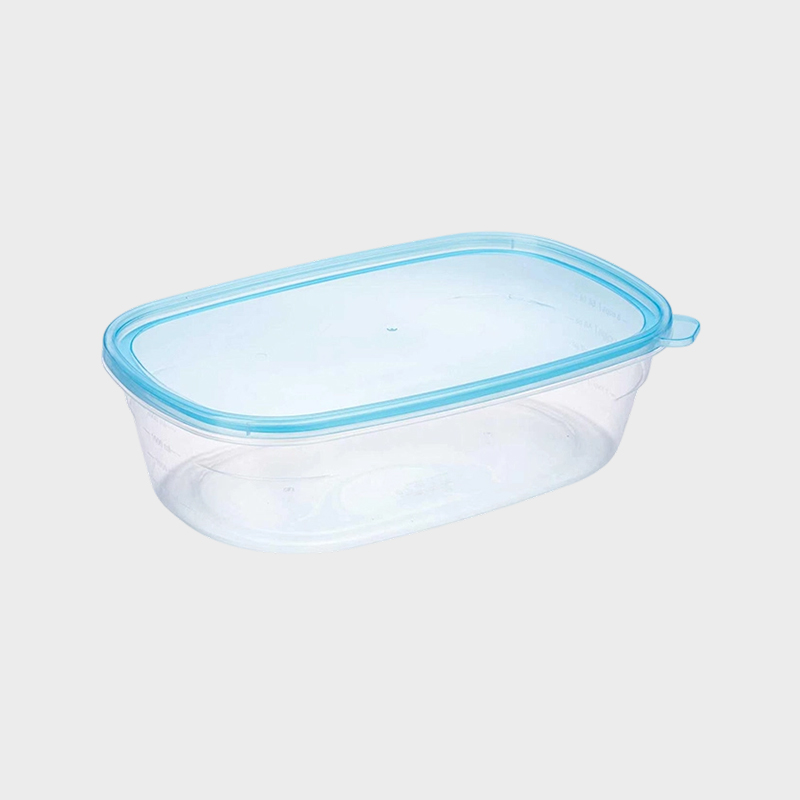
For leftovers, choose rectangular PP containers with clear sides and a lid that seals on all four sides. Rectangular shapes use fridge space efficiently, and clear walls let staff or family see what is inside without opening the lid. For a reusable option with a straightforward airtight lid, the 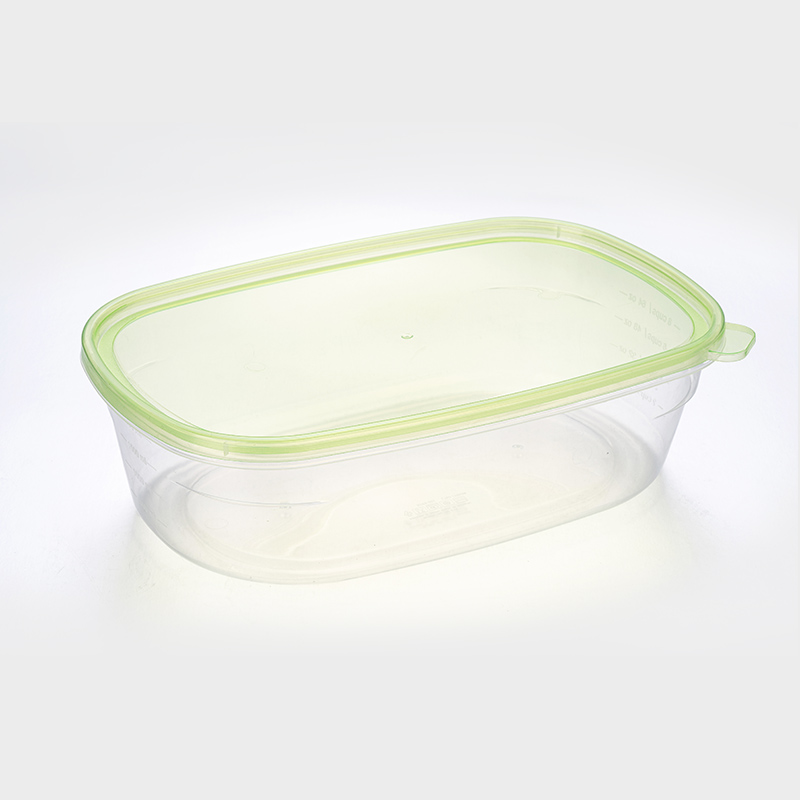 Customizable Rectangular Airtight PP Food Storage ContainersUseful reference for reusable rectangular airtight storage: 2.4 L food-grade PP, silicone-gasket lid, stackable nesting design, and customizable color and capacity.View Product → is a practical reference point for size and seal design.
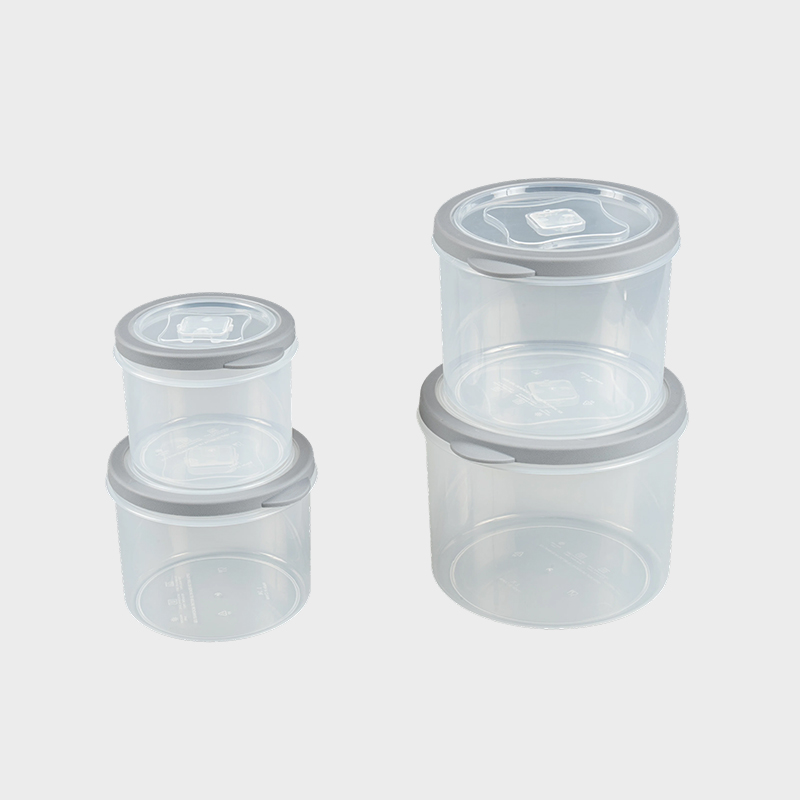
If the container will travel, test the lid with a light shake and a tilted water fill. A latch lid is not automatically better than a snap lid; the hinge and gasket material decide whether it survives daily use. For a retail-ready option, the 4.2 L PP food storage bowl with locking lid and the 360 ml cylindrical container with vented lid show two different seal strategies.
Dry goods and pantry
For rice, flour, pasta, nuts, and snacks, moisture control matters more than impact strength. A container with a silicone gasket and a wide opening is easier to fill and scoop. Avoid very deep, narrow boxes for flour because the bottom is hard to clean and the contents settle unevenly. For pantry storage, a 1–2 L square box with a flat lid stacks better than a round bowl.
Freezer and batch cooking
Freezer containers need headspace, a flexible lid, and a resin that does not become brittle at low temperature. Fill to about 80–85% capacity, cool food before freezing, and choose containers that stack with a positive rim. For large batches, the 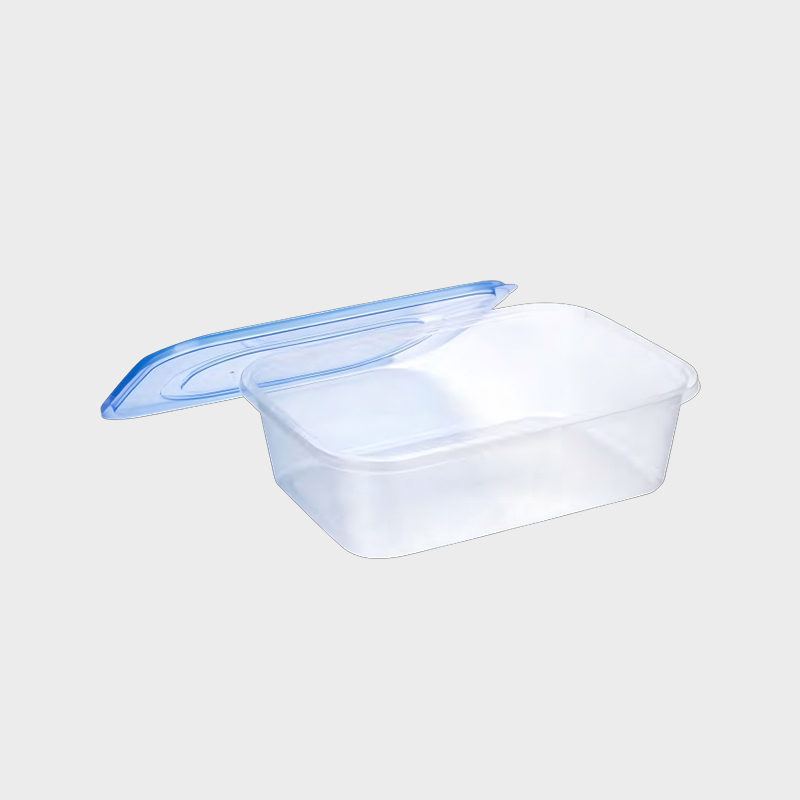 6.4L Large PP Food Storage Tub with Lid PFB0146.4L Large PP Food Storage Tub with Lid is a spacious and practical storage container designed for food, fruits, vegetables, agricultural products, and other bulk item...View Product → offers the kind of volume that suits soups, stews, and bulk meal prep.
Takeaway and catering
For takeaway, the container must survive transport, hold sauce, and reheat without distortion. A vented latch lid helps with steam, but the vent must close securely for delivery. The  1420 ml Rectangular PP Food Storage Container with Vented Latch LidA 1420 ml food-grade PP container with four-side latches, sealing gasket, and silicone-sealed vent for transport, cold storage, and microwave reheating.View Product → is an example of a rectangular format with a four-side latch and vented lid for operators who need both reheating and transport.
At our Ningbo factory, we mold food storage containers in PP and related food-contact grades, and we support OEM/ODM projects from size and lid design through packaging. If you are sourcing in volume, compare the plastic fresh-keeping box range before locking a specification, because the lid and wall thickness change the cost more than the box shape alone.
Common buying risks and how to test before a bulk order
The main buying risks are lid mismatch, thin walls, unclear heat limits, and gasket loss, and all four can be checked before a bulk order.
- Lid mismatch. Lids from one mold may not fit bases from another. Ask for a fitted-sample check and a lid retention test after 20 open-close cycles.
- Thin walls. A box that flexes at the rim will leak and stack poorly. Measure rim thickness and base thickness, not just the middle of the wall.
- Heat claims. “Microwave safe” needs a temperature and time basis. A container may survive 2 minutes at 70°C but warp with oil at 100°C.
- Gasket loss. Silicone gaskets can stretch or fall out during washing. Check whether the gasket is removable, replaceable, or molded in.
For a bulk order, run a three-part sample test: fill with water and invert for 10 minutes, fill with tomato sauce and leave overnight, then wash five times and repeat the lid check. Record the results by batch. This is faster and cheaper than discovering a lid problem after 20,000 units are molded.
Cleaning, odor, and replacement
Most plastic food containers fail from cleaning and wear, not from the day they are bought.
- Wash with warm water and mild detergent; avoid abrasive pads on clear walls.
- Remove gaskets weekly and clean the groove with a soft brush.
- Do not pour boiling water into a cold container; thermal shock can crack thin walls.
- Replace containers that smell after washing, have deep scratches, or no longer seal.
Tomato, turmeric, and oily curry can stain PP over time. Staining is usually cosmetic, but a persistent smell or a cloudy, scratched surface can harbor residue. For commercial use, set a replacement cycle based on wash counts rather than calendar time.
FAQ
The short answers below focus on microwave use, freezing, lifespan, and visibility, because those are the four questions buyers ask most often.
Are plastic containers for food storage safe in the microwave?
Only if the container is labeled microwave-safe and the lid is vented or removed. PP is the common microwave-safe resin, but heat tolerance depends on the whole container, including the lid and any gasket.
Which plastic is best for freezing food?
PP and PE are common freezer-safe choices because they stay flexible at low temperature. Leave 15–20% headspace, cool food before freezing, and avoid rigid PS containers for wet, expanding foods.
How long do plastic food containers last?
For household use, 2–3 years is common with regular washing; commercial use may be 6–12 months. Replace when the seal fails, the wall cracks, or the surface becomes heavily scratched.
Are clear containers better than opaque ones?
Clear containers make inventory and leftovers visible, which reduces waste. Opaque containers can protect light-sensitive foods and hide stains, but they are harder to inspect without opening.
Plastic containers for food storage work best when the material, lid, size, and heat limit are chosen together. Start with the storage job, confirm the food-contact documentation, and test the lid before scaling a bulk order. A simple, well-fitted PP container with a reliable seal will outperform a larger set with thin walls and vague heat claims.