

 Español
 Deutsch
Catering plastic containers are food-safe plastic vessels designed to prepare, transport, store, and serve food in volume for restaurants, catering companies, food trucks, and meal-prep businesses. They range from single-use compartment trays to reusable, microwave-safe storage boxes, and they are selected primarily for durability, hygiene, cost efficiency, and stackable storage.
The right container does more than hold food. It protects portion consistency, prevents leakage during transit, and reinforces your brand's professionalism when a client lifts the lid at an event. This guide covers the container types, materials, features, sizing, compliance, and sourcing options that matter most, so you can buy with clear criteria instead of guesswork.
Why Plastic Containers Are the Backbone of Catering Operations
Plastic containers outperform paper, glass, and metal alternatives for the majority of catering scenarios because they deliver the lowest combined cost per serving, the lowest transport weight, and the most reliable seal in one package.
For a caterer moving hundreds of meals across town, every kilogram matters. Plastic containers are dramatically lighter than glass or metal, which lowers fuel costs and eases loading for kitchen staff. They are also shatter-resistant, so a dropped box rarely results in ruined food or on-site hazards. Most designs stack neatly, saving space in the kitchen, in delivery vehicles, and at the event venue.
The operational benefits are tangible:
- Cost efficiency: food-grade plastic boxes cost less per unit than coated paper or compostable alternatives when purchased at volume.
- Temperature versatility: microwave-safe polypropylene grades move directly from the refrigerator to the microwave without warping.
- Hygiene: single-use containers eliminate cross-contamination risk during large group service.
- Presentation: clear lids let clients inspect the meal without breaking the seal.
Main Types of Catering Plastic Containers You Should Know
Four container formats cover almost every catering need: compartment lunch boxes, round containers with secure lids, double-compartment trays, and reusable fresh-keeping boxes. Each format solves a different operational problem, so most caterers carry two or three types at once.
Compartment Lunch Boxes
Compartment lunch boxes keep mains, sides, and sauces in separate sections within a single tray, which prevents flavor mixing and keeps portion plating consistent. They are the standard choice for corporate lunches, event catering, and subscription meal-prep programs. For most menus, a three-section design offers the best balance between variety and packaging cost.
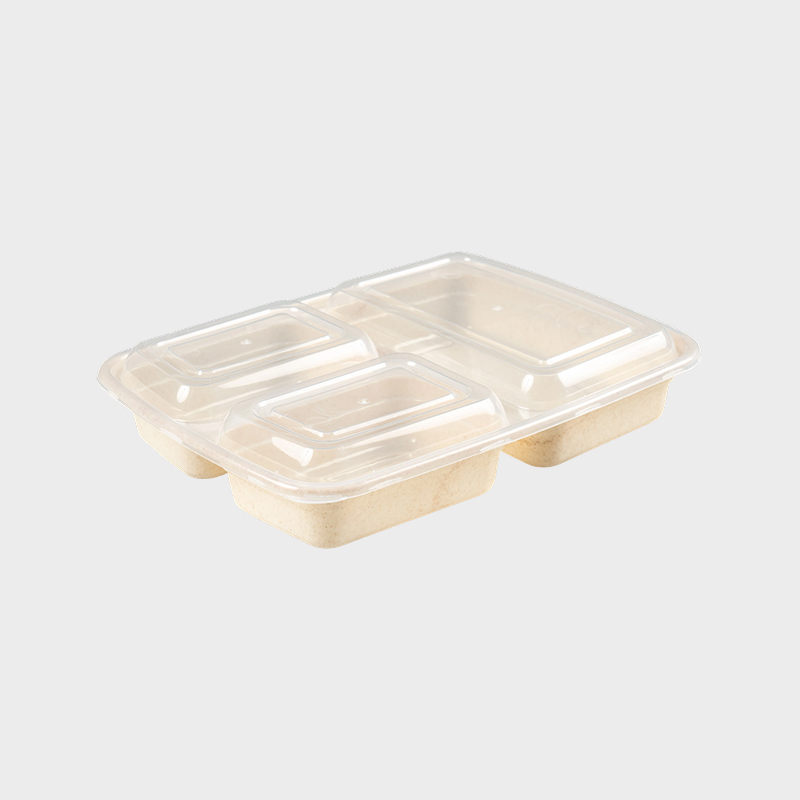 Three-Compartment PP Bento Box with 900ml Capacity for Meal PrepThis lightweight lunch box separates staple, sides, and dessert in three compartments, preventing flavor mixing. Its 900ml capacity and durable PP material make it a practical choice for corporate lunches, meal-prep programs, and takeout.View Product →
Round Containers with Secure Lids
Round containers are the workhorse of catering transport for soups, stews, rice, pasta, and curries. A full-perimeter lid creates a dependable seal that resists spillage even when containers tilt during loading. Thick-wall round boxes also hold temperature better, keeping hot dishes warmer and cold dishes cooler during short delivery windows.
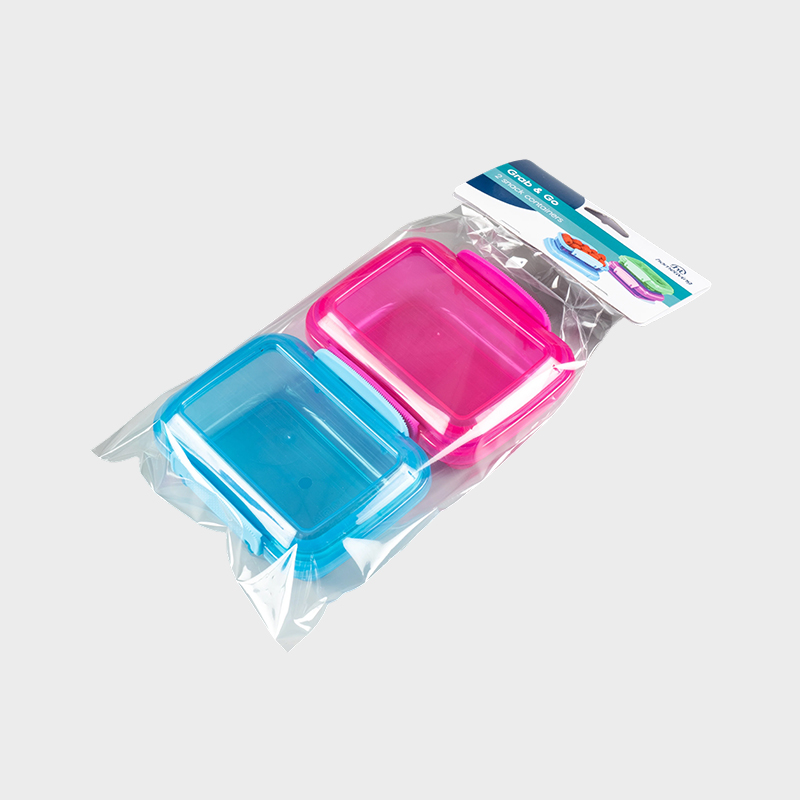 Transparent Round PET Serving Bowl with Anti-Fog and Stackable DesignThis crack-resistant PET bowl displays food attractively and stacks easily thanks to its recessed base. Anti-fog technology keeps contents fresh, while a secure lid ensures safe transport, making it ideal for food stalls and catering.View Product →
Double-Compartment Trays
Double-compartment trays let a caterer pair a main dish with a vegetable, salad, or dipping sauce in one sealed unit. When made from microwave-safe polypropylene, these trays support rapid reheating without transferring odors between compartments. This format is especially popular for corporate catering and weekly meal-prep contracts.
Reusable Fresh-Keeping Containers
For back-of-house storage, reusable fresh-keeping containers hold prepped ingredients, sauces, and leftovers under airtight seals. Commercial-grade versions with overmolded or latching lids survive repeated wash cycles while maintaining stackability in walk-in refrigerators.
Material Matters: Comparing PP, PS, and PET
The polymer determines microwave safety, clarity, mechanical strength, and price, so it should be your first filter when evaluating catering containers. Three materials dominate the market: polypropylene (PP), polystyrene (PS), and polyethylene terephthalate (PET).
| Material | Microwave Safe | Durability | Clarity | Best Use | Typical Cost |
|---|---|---|---|---|---|
| PP (Polypropylene) | Yes | High, flexible | Translucent | Hot meals, reheating, reusable containers | Moderate |
| PS (Polystyrene) | No | Low, brittle | Very clear | Cold dishes, short-term transport, budget events | Low |
| PET (Polyethylene Terephthalate) | No | Medium | Excellent | Cold drinks, salads, desserts, display packaging | Low to moderate |
PP is the default choice for professional caterers because it tolerates temperatures from about -20°C to 120°C, returns to shape after flexing, and resists grease and food acids. PS delivers high clarity and low cost but shatters easily and cannot go in the microwave. PET offers glass-like transparency for cold salads and desserts, yet it lacks the heat resistance of PP.
Six Features That Determine Real-World Performance
Before approving a supplier or placing a bulk order, verify these six features - together they decide whether a container performs under actual catering conditions:
- Leak-proof lid design: roll-on, latch-lock, or overmolded seals prevent drips during transport and stacking.
- Microwave and freezer tolerance: review temperature ratings on the product specification sheet.
- Stackability: confirm that filled containers can be stacked without lid deformation or collapse.
- Lid clarity: high-clarity lids speed up order checking and improve customer presentation.
- Recyclability: clean PP containers can be recycled in many municipal streams.
- Food-contact compliance: request migration test reports for the finished product.
These criteria separate a premium container from a commodity box. A truly leak-proof lid, for example, can reduce complaint rates and re-delivery costs more than any other single feature.
Portion Control: Matching Container Sizes to Your Menu
Container capacity should adapt to your portion strategy, not the other way around. Correct sizing reduces food waste, stabilizes food cost per plate, and prevents the empty-box impression that damages catering reviews.
| Capacity Range | Typical Portions | Recommended Format |
|---|---|---|
| 500-750 ml | Side dishes, desserts, sauce portions | Single-compartment box or round cup |
| 750-1200 ml | Single mains, standard lunch boxes | Two- or three-compartment tray |
| 1200-2000 ml | Large mains, family platters, pasta portions | Round container with lid |
| 2000 ml and above | Buffet transport, bulk salads, catering volumes | Extra-large rectangular tray |
When planning a menu, list every dish with its estimated portion weight, then match each item to the closest capacity band. This prevents the common mistake of ordering one universal size for everything, which leads to either overfilled trays that leak or half-empty boxes that disappoint clients.
Food Safety and Compliance: Documentation You Must Request
Food safety compliance is non-negotiable when containers contact food, so always request material test reports and certification documentation before committing to a supplier.
Food-grade containers must be produced from resins that satisfy the food-contact regulations of your target market, such as FDA 21 CFR for the United States or the EU framework regulation on food-contact materials. Reputable manufacturers provide migration test reports and compliance certificates without hesitation. It is equally important to verify the factory itself: third-party certification such as BSCI indicates that independent auditors regularly inspect working conditions, ethical sourcing, and management systems.
Restaurant owners who want a practical understanding of how disposables behave under real operating conditions can read the industry guide for what restaurant owners should know about plastic disposable fast food boxes. Knowing these fundamentals helps you ask suppliers better questions and avoid compliance gaps.
Bulk Sourcing and Custom OEM Manufacturing
For most catering operations, buying directly from the manufacturer through OEM or ODM channels is the most cost-effective route to high-quality containers at volume.
Working with a manufacturer such as Ningbo Panfeng Mould Plastic Co., Ltd. gives you access to a catalog of proven standard products at factory prices, plus the option of custom solutions. You can request custom colors, embossed logos, unique compartment layouts, or fully custom molds. The combination of Chinese manufacturing cost efficiency and export experience across more than 90 countries makes this model attractive for catering franchise groups and food-service distributors. The company's phase-two production base, now operating in Ningbo, increased capacity by 40 percent, which shortens lead times for large orders. Start by requesting sample kits, then compare landed costs including freight and import duties before committing to container quantities. To discuss your specifications, volumes, and timelines, contact the factory team directly.
Sustainability in Catering Packaging
Sustainable sourcing does not require abandoning plastic containers; it requires choosing recyclable or reusable formats and working with a supplier that takes end-of-life seriously.
PP is widely recyclable when separated and cleaned, and many catering buyers now combine disposable PP containers with returnable reusable boxes to reduce waste. Reusable fresh-keeping containers extend the useful life of each package by months, and stackable designs lower the carbon footprint of transport by fitting more product per truckload. Responsible manufacturers also explore recycled content where food-safety regulations permit. When evaluating a supplier, ask for recycling guidance, recycled-content options, and documented waste-reduction practices.
Frequently Asked Questions About Catering Plastic Containers
Are catering plastic containers microwave safe?
Only containers marked or documented as microwave-safe, which are generally PP-based. PS and PET containers can deform or overheat rapidly and should never be microwaved. Always check the specification sheet rather than relying on visual appearance.
Can disposable catering containers be reused?
Some can. Thick-wall PP containers withstand multiple wash cycles as long as the lids maintain their seal, but thin PS trays are intended for single use and may crack during cleaning. When the manufacturer does not state reusability, treat the product as single-use.
What is the difference between PP and PET containers?
PP is a flexible, heat-resistant plastic that can go in the microwave and is common for hot food trays, while PET is clear, rigid, and best suited for cold items. PET offers superior transparency; PP offers better heat tolerance and impact durability.
How long does an OEM container project take?
Standard product orders usually ship within weeks, while custom-mold projects typically take 45 to 60 days from design confirmation to sample approval, depending on complexity and tooling requirements. Request a written project timeline from your supplier before placing the order.
The Bottom Line for Catering Buyers
The best catering plastic containers match your menu, portion sizes, and service model in material, seal quality, and price. Start by mapping your dishes to capacity bands, then filter candidates by microwave safety and leak-proof lids, and finally verify compliance documents from the supplier.
Buying directly from an experienced manufacturer gives you better pricing, custom-branding options, and lead-time control. With the right supplier, your containers become a quiet extension of your kitchen that keeps food safe, consistent, and presentable at every event.