

 Español
 Deutsch
If you are sourcing juice plastic containers, the short answer comes first: choose the resin, then the wall thickness, then the closure. Polypropylene (PP) handles hot fill and pasteurization up to roughly 95 °C; PET suits cold fill and chilled retail; PS suits cold display with a short shelf life. Reverse that order and you will spend the rest of the project fixing leaks, paneling, and failed migration paperwork.
What follows covers what the category actually includes, how to read a specification, which compliance documents matter, and where the real cost sits.
What Counts as a Juice Plastic Container
A juice plastic container is any rigid plastic package whose primary contents are juice, from a 150 ml single-serve cup to a 3 L family jar, whether it is discarded after one use or refilled for months.
Buyers usually mean one of four manufacturing routes:
- Injection-molded cups and tumblers — thicker walls, reusable, straightforward to decorate.
- Thermoformed cups — thin walls, very high output, common in food service and catering.
- Blow-molded bottles — PET, cold fill, still or lightly carbonated.
- Injection-blow wide-mouth jars — thick base, hot fill, pulp-heavy or fibrous juice.
The body is only half the package. Neck finish, liner, and label frequently decide whether the filling line runs at speed.
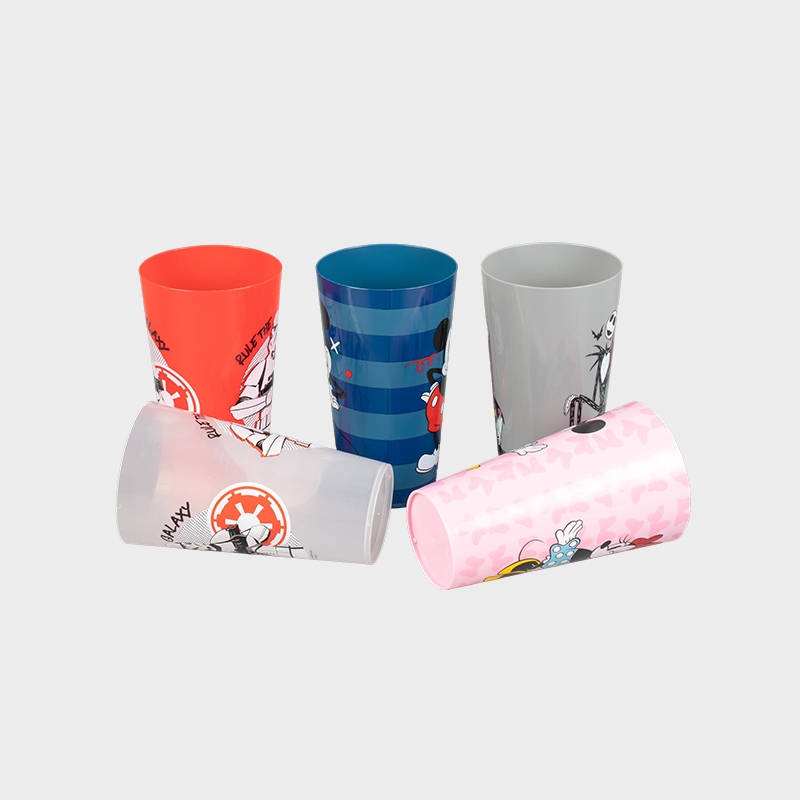 1000ml Stackable PP Tumbler with Heat Transfer PrintingA 1000ml stackable PP tumbler with heat-transfer graphics, tapered nesting, and a 61g durable body for high-volume event, theme-park, and beverage branding.View Product →
PET, PP, and PS: Match the Resin to the Fill Line
Resin choice is a temperature decision first and a cost decision second.
PET gives the clearest wall and the best oxygen barrier for chilled juice, but it softens above roughly 65 °C. PP survives hot fill and pasteurization but reads translucent rather than glass-clear. PS is the cheapest clear option and the most brittle, which is acceptable for cold, short-life servings and risky everywhere else.
| Property | PET | PP | PS |
|---|---|---|---|
| Fill temperature | Cold to about 65 °C | Cold to about 95 °C, hot fill | Cold, up to about 60 °C |
| Clarity | Glass-like | Translucent | Glass-like |
| Oxygen barrier | Good | Moderate | Moderate |
| Freezer use | Limited | Good | Not recommended |
| Recyclability | Widely recycled, resin code 1 | Widely recycled, resin code 5 | Limited, resin code 6 |
| Typical juice use | Chilled bottles, 250 ml to 1 L | Hot-fill jars, cups, tumblers | Single-serve cups, dessert-style packs |
| Relative resin cost | Medium | Medium to high | Low |
One practical note: if the same filling line handles both hot and cold products, standardizing on PP usually costs less than running two resin streams, even though the resin itself is not the cheapest.
Wall Thickness, Neck Finish, and Closure Fit
Most leaks in juice packaging start at the neck, not the body.
A container that passes a drop test with water can still fail with juice, because juice wets the sealing surface differently and sugar residue can hold a liner open. Write the following numbers into the purchase order rather than trusting a catalogue photo.
- Neck finish: 38-400 and 33-400 for bottles; 400/410 or 89 mm snap-on for wide-mouth cups and jars.
- Wall thickness: 0.4 to 0.7 mm for thermoformed cups; 0.8 to 1.5 mm for injection-molded tumblers and reusable jars.
- Application torque: typically 12 to 18 in-lb on a 38 mm closure, verified with a torque tester rather than by hand.
- Drop test: 1.2 m onto a hard surface, filled and closed, following ASTM D5276.
- Headspace: leave 4 to 6 percent of volume for hot fill so thermal contraction does not draw the walls inward.
Ask for the T dimension and E dimension of the finish. If the supplier cannot state them, the closure supplier will be guessing, and the first production run becomes the test.
Food-Contact Compliance: The Paperwork That Protects You
Ask for a migration test report on the finished article, not only a resin certificate.
Resin certificates prove what went into the hopper. They say nothing about colorants, lubricants, or processing aids added later. For juice, which is acidic and often contains pulp, the relevant documents are:
- FDA food-contact clearance, for example 21 CFR 177.1520 for polypropylene and 177.1630 for PET.
- EU Regulation 10/2011, with overall migration below 10 mg/dm² or 60 mg/kg of food simulant.
- LFGB testing for the German market, and similar national schemes where they apply.
- A social compliance audit such as BSCI where retail buyers require it.
- Batch-level traceability linking finished cartons back to resin lots.
These three threads — material, seal, and safety — are usually tested together, which is why a general guide to what makes a food-grade plastic container reliably safe reads as surprisingly relevant to juice packaging.
Hot Fill, Cold Fill, and Freezer Use
Match the filling temperature to the resin and the container will do the rest of the work.
Hot fill between 85 and 95 °C demands PP, a vacuum panel, and a closure with a liner rated for the same temperature. PET is normally filled cold or warm and capped immediately; pushing PET past 70 °C produces shrinkage and distorted threads. PS should not see hot product at all.
Cold-pressed and refrigerated juice
For cold-pressed lines, clarity sells. A smooth, transparent, food-grade cup shows the color of the juice and the separation line that customers look for, and it can be run on standard cup-filling equipment without new tooling.
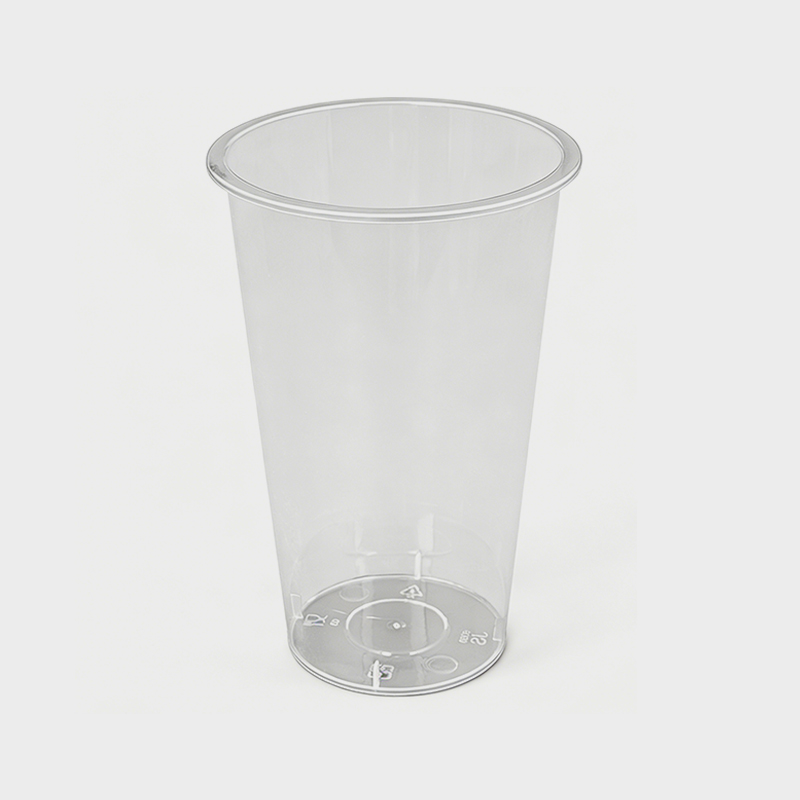 Recyclable Transparent Food-Grade PET Cold Drink CupA clear recyclable PET cup that shows cold-pressed juice color and runs on standard filling lines, with thick food-grade walls and custom branding.View Product →
Concentrate, pulp, and refill formats
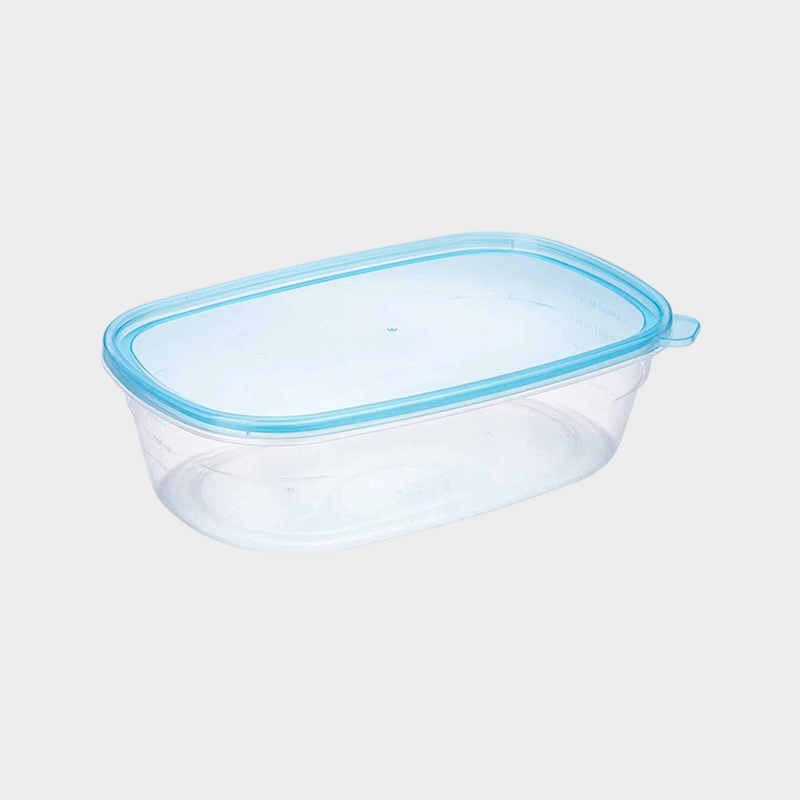
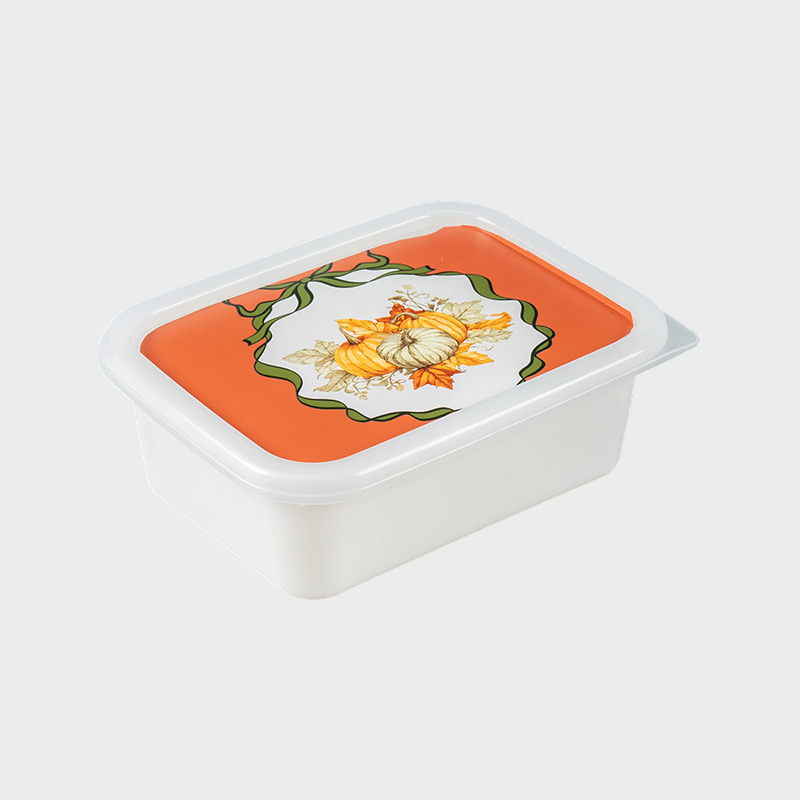
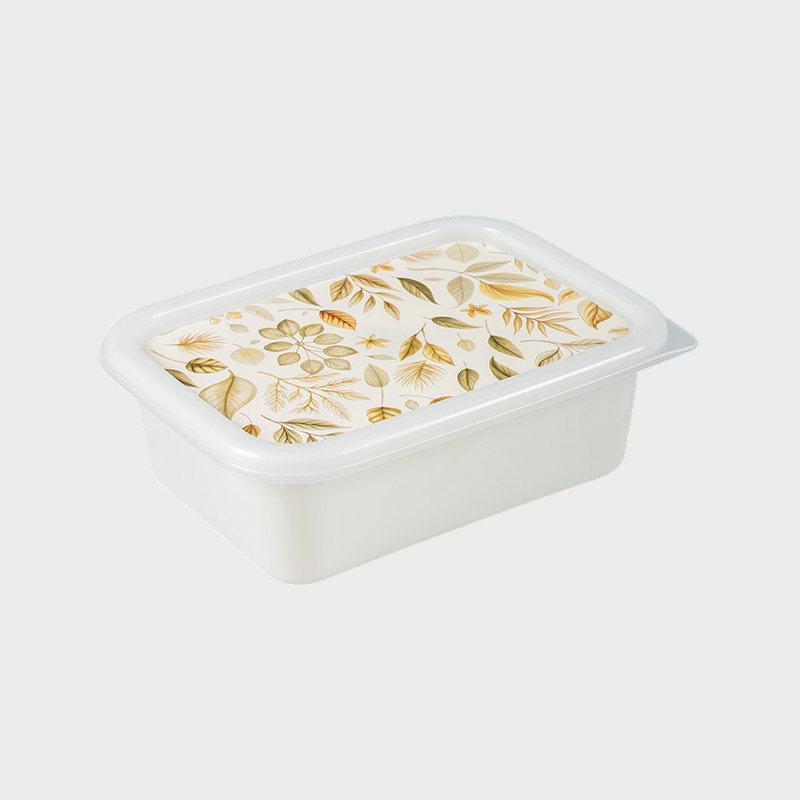
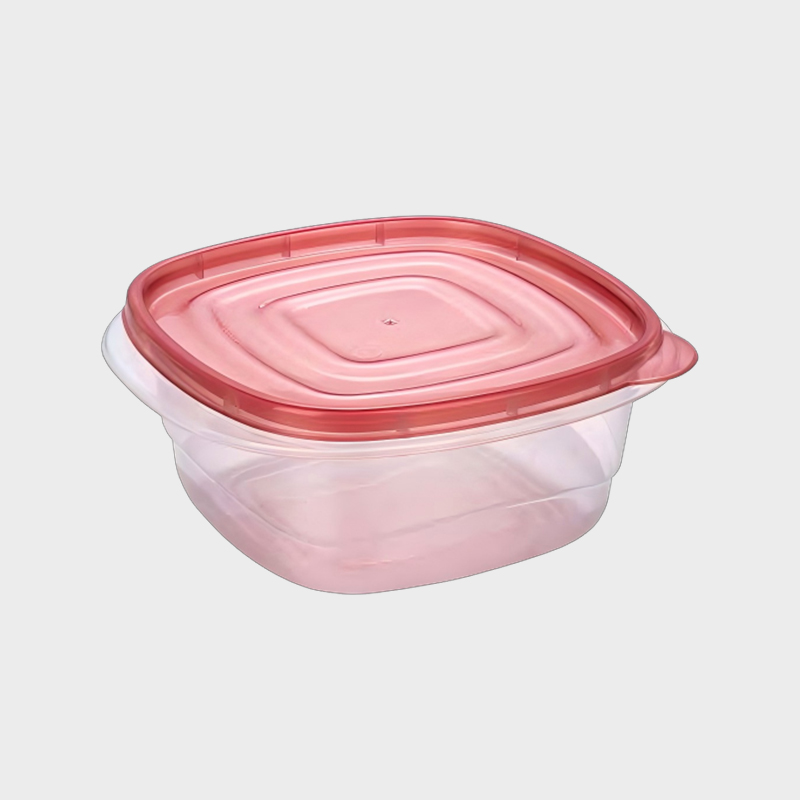
Where customers buy concentrate or repack juice at home, an airtight rectangular container with a sealing lid keeps oxidation down between servings. Square footprints also pack more efficiently in retail cartons than round ones, which matters when freight is calculated by volume.
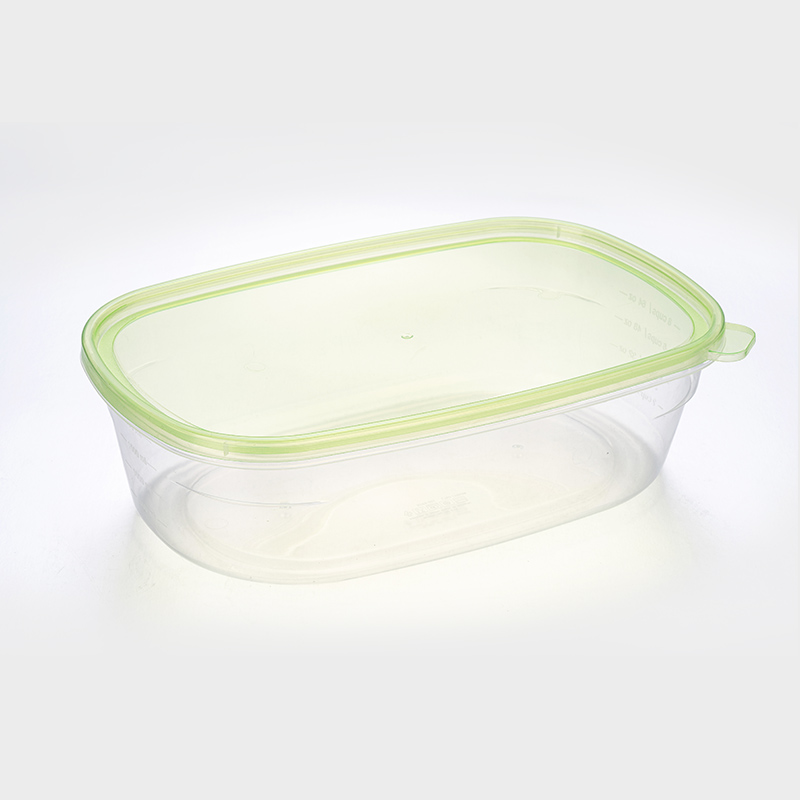 Customizable Rectangular Airtight PP Food Storage ContainerA stackable rectangular airtight PP container with silicone-sealed lid, 2.4L capacity, and Pantone color options for kitchen, takeout, and branded food packaging.View Product →
Cost, MOQ, and the Decisions That Move Price
Part weight, decoration method, and tooling amortization decide the unit price long before the resin index does.
- Wall thickness and part weight: resin is bought by the kilogram, so a 500 ml cup at 12 g costs far more per thousand than the same cup at 9 g.
- Decoration: in-mold labeling gives the best finish and the highest tooling cost; heat transfer printing and shrink sleeves sit in the middle; paper labels are cheapest and last the shortest time in a chilled cabinet.
- Tooling: a multi-cavity mold spreads cost over volume, so small first orders often carry a higher amortized tooling charge per piece.
- MOQ: printed cups commonly start between 10,000 and 30,000 pieces per design, while unprinted stock sizes can ship in far smaller quantities.
- Logistics: nesting and stacking features reduce container and pallet costs, which is easy to overlook when comparing two quotes.
Working With an OEM Manufacturer
OEM and ODM support matters most when the container is part of your brand rather than a commodity purchase.
Ningbo Panfeng Mould Plastic Co., Ltd. manufactures food-contact plastic products in Ningbo, China, and supplies customers in more than ninety countries. The company runs an integrated quality system that follows material from incoming resin through to finished goods, holds BSCI certification, and brought a second production base online that lifted capacity by roughly 40 percent. For juice projects, that combination usually means custom wall thickness, custom neck finish, and custom decoration handled by one supplier instead of three.
Frequently Asked Questions
Short answers to the questions that come up most often during sampling. For sampling schedules, shipping terms, and documentation requests, the site FAQ covers the operational details.
Are juice plastic containers recyclable?
PET and PP are the two most widely accepted streams. PS is recyclable in theory but accepted in far fewer programs, so a mono-material PP or PET range usually simplifies disposal messaging.
Which resin is best for citrus juice?
PET for chilled citrus where clarity and oxygen barrier matter; PP where the product is pasteurized or filled hot, since acid plus heat is the harder combination.
Can PP juice containers be hot-filled?
Yes. PP tolerates roughly 95 °C, provided the design includes a vacuum panel or enough headspace and the closure liner is rated for the same temperature.
What wall thickness do I need for a 500 ml cup?
For a stackable cold-fill cup, 0.45 to 0.6 mm is typical. For a reusable tumbler that will be washed repeatedly, 0.9 mm and above holds its shape better.
What is a typical minimum order quantity?
Unprinted stock sizes can be ordered in small lots. Custom printing and custom colors usually start around 10,000 to 30,000 pieces per design, because of tooling and print setup.
Decide the resin from the filling temperature, lock the neck finish and closure together, and confirm compliance on the finished article. Do those three things in that order and a juice container project stops being a gamble — the cup, the lid, and the paperwork all point the same way.