

 Español
 Deutsch
Short answer: Yes, you can freeze plastic containers, but only if they are marked freezer-safe and made from the right resin. Freeze chili in a polystyrene takeout box and you will likely find a cracked container and a puddle on the shelf; freeze the same chili in a PP meal-prep container and it will thaw cleanly weeks later. PP (resin code 5), HDPE (2), LDPE (4), and PET (1) all handle typical freezer temperatures without becoming chemically unstable, while polystyrene (6) and most thin single-use containers turn brittle and crack.
The reason has to do with how plastics behave at low temperature. A container that is not designed for freezing will often split, warp, or let in air, which ruins food quality and shortens the container's life. The sections below explain which plastics pass the freezer test, how to read the labels, and what to do — and avoid — when freezing food in plastic.
Which Plastic Containers Are Safe to Freeze?
Freezer-safe plastic containers are made from PP, HDPE, LDPE, or PET, and the quickest way to confirm is to check the resin identification code on the bottom of the container. Look for a small triangle with a number inside, usually molded into the base. If you also see an ice-crystal symbol or the words "freezer safe," the manufacturer has tested the container for low-temperature use.
The table below summarizes the seven common resin codes and how they behave at a typical freezer temperature of -18°C (0°F).
| Resin code | Plastic type | Freezer-safe? | Common containers |
|---|---|---|---|
| 1 | PET | Mostly yes | Water bottles, fruit trays, clear clamshells; fine for one-time freezer use |
| 2 | HDPE | Yes | Milk jugs, heavy-duty storage boxes; stays tough at -18°C |
| 3 | PVC | Not recommended | Some wraps and bottles; additives can migrate over time |
| 4 | LDPE | Yes | Squeeze bottles, freezer bags, many lids; remains flexible when cold |
| 5 | PP | Yes | Reusable meal-prep containers, takeout clamshells; strong cold and heat resistance |
| 6 | Polystyrene | No | Foam trays, disposable cups, cheap takeout boxes; cracks very easily |
| 7 | Other / mixed | Check the label | Polycarbonate, PLA, multilayer packaging; freeze only if explicitly marked |
If you want a container that resists cold cracking and accidental drops, a drop-resistant, shatterproof round sealed box with lid is a practical choice for soups, stews, and other high-moisture dishes. It uses food-grade PP with an overmolded seal that stays soft and airtight at freezer temperatures.
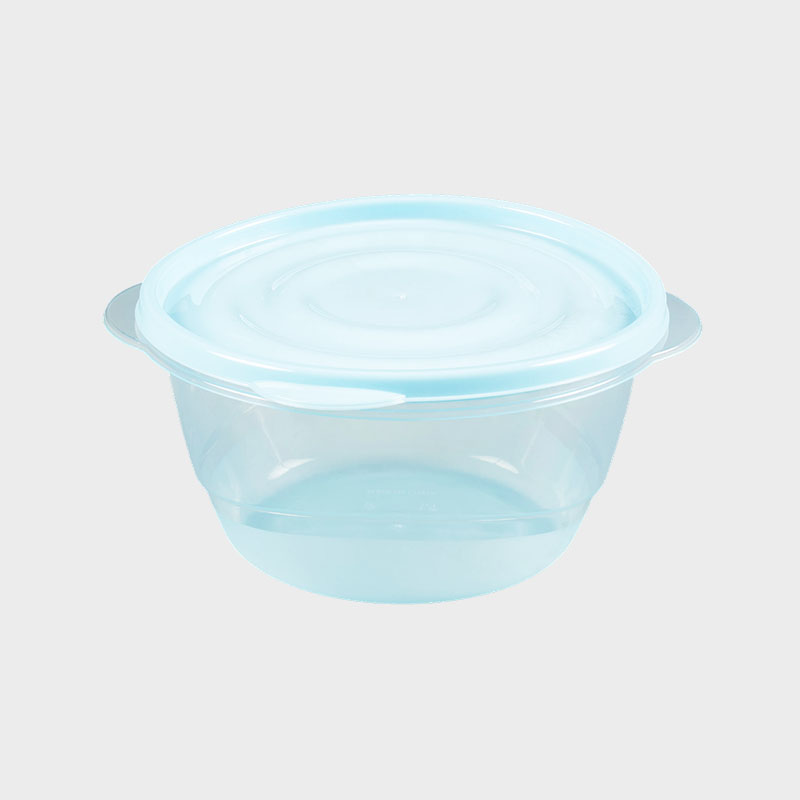 Round Sealed Box With Lid, Shatterproof Plastic Food Storage Box ManufacturerNingbo Panfeng Mould Plastic Co., Ltd is a China round sealed box with lid manufacturer and company, we offer wholesale shatterproof plas...View Product →
What Happens to Plastic Containers in the Freezer?
Plastic containers fail in the freezer for one main reason: the resin is not flexible enough at low temperature, so the container cracks or warps instead of stretching as it contracts. All plastics shrink slightly when cooled. Polypropylene stays tough down to about -20°C, which covers standard home freezers, while HDPE and LDPE remain rubbery far below that. Polystyrene, by contrast, is already rigid at room temperature and becomes glass-like at -18°C, which is why foam takeout boxes snap so easily.
Two additional risks are worth knowing. First, water expands by about 9% when it freezes, so an overfilled container will bulge, pop its lid, or split along the side. Second, repeated freeze-thaw cycles create micro-cracks in thin containers; those tiny lines collect moisture and bacteria, which is why single-use deli tubs are not meant for long-term freezer rotation.
On the safety side, freezing does not cause significant chemical leaching from food-grade containers. Chemical migration slows at low temperature; the bigger concern is heating food in containers that are not marked microwave-safe. For more detail on what makes a food-grade plastic fresh-keeping box truly reliable, our guide to food-grade fresh-keeping box reliability covers material selection, seal quality, and testing.
How to Freeze Food in Plastic Containers Safely
Freezing food safely in plastic containers comes down to three rules: choose a freezer-safe resin, leave headspace for expansion, and keep the seal airtight. Following these rules prevents cracked lids, freezer burn, and off-flavors.
- Pick a container marked freezer-safe, ideally PP, HDPE, or LDPE.
- Leave at least 2 cm (about 3/4 inch) of empty space below the rim for liquids to expand.
- Cool cooked food to room temperature before sealing it, so condensation does not form ice on the lid.
- Close the lid firmly to block air, which is the main cause of freezer burn.
- Write the contents and date on the lid or a label; most cooked meals keep good quality for 3 to 6 months.
- Thaw in the refrigerator. Only transfer directly to the microwave if the container is clearly labeled microwave-safe as well.
Which containers work best for meal prep and leftovers?
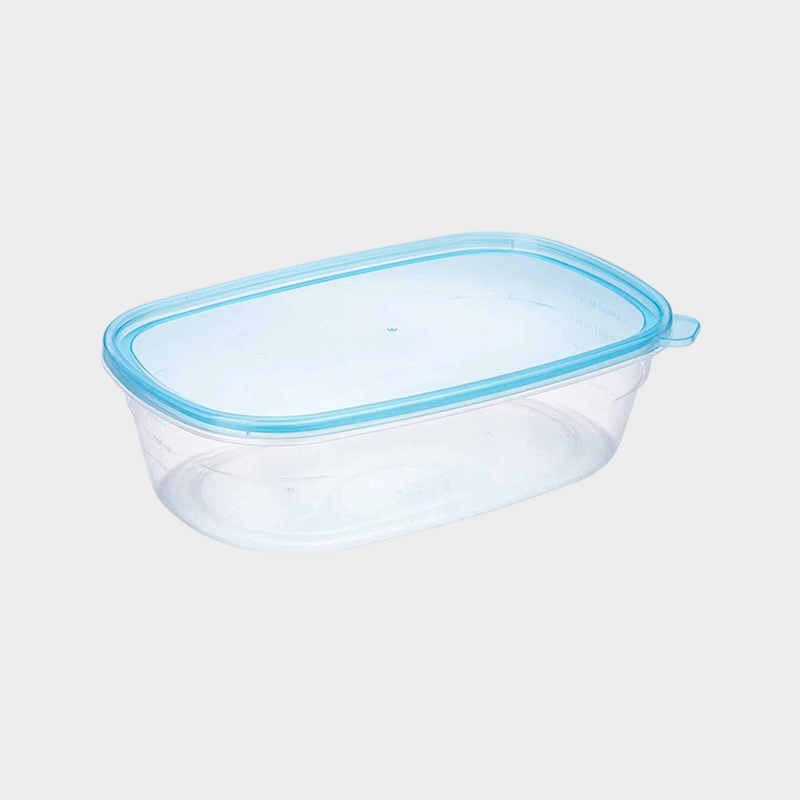
For meal prep, a lockable PP container with a tight-fitting lid is the most reliable choice because it combines cold toughness with an airtight seal. A blue lockable plastic crisper box is a good example: the four-side locking lid keeps salads, cut vegetables, and cooked grains fresh, and the squared footprint stacks neatly in a chest or drawer freezer.
How cold is too cold for plastic?
Standard home freezers run at about -18°C (0°F), which is well within the safe operating range for PP, HDPE, and LDPE. Deep freezers that reach -30°C or below can gradually embrittle even good containers, especially thin lids, so avoid setting the temperature lower than the container label recommends.
Plastic vs. Glass vs. Freezer Bags for Frozen Food
Freezer-safe plastic is the best everyday choice for most households: it is light, stackable, and unbreakable, while tempered glass is better for long-term liquid storage and oven reheating, and freezer bags win when space is tight. There is no single best container; the right choice depends on what you freeze and how you plan to reheat it.
| Feature | Freezer-safe plastic (PP/HDPE) | Tempered glass | Silicone freezer bags |
|---|---|---|---|
| Cold tolerance | Down to about -30°C | Down to -40°C, but thermal shock can shatter | Down to -40°C |
| Breakage risk | Low; flexes with cold | Higher; cracks if chilled too fast | Very low |
| Weight | Light | Heavy | Light |
| Airtightness | Good with gasketed lids | Excellent | Good with zipper seals |
| Reheating | Microwave only if marked | Oven and microwave | Microwave only |
| Best for | Meal prep, daily leftovers, stacking | Soups, sauces, long-term storage | Flat freezing, marinades, saving space |
Resin code tells you whether a material belongs in the freezer; the final decision still depends on lid design and wall thickness, which is why it pays to test a sample batch before committing to a bulk order.
Common Mistakes That Crack Frozen Plastic Containers
Almost all cracked freezer containers result from one of five avoidable mistakes: overfilling, freezing hot food, using polystyrene, stacking warm lids, or reusing thin deli tubs over and over. Avoid these and your containers will hold up for years.
- Filling to the rim. Expanding ice pushes the lid off and can split the side of the container.
- Freezing hot food. Rapid cooling creates condensation and uneven contraction that warps lids.
- Using polystyrene takeout boxes. They look sturdy but shatter at freezer temperature.
- Stacking containers before they freeze. Pressure distorts soft warm lids and breaks the seal.
- Reusing single-use deli tubs indefinitely. Thin walls develop micro-cracks and absorb odors.
Frequently Asked Questions
Here are the answers to the freezer-container questions we hear most often from home cooks and food-industry buyers. If you have a specific question about food-contact plastic, our factory FAQ page covers materials, certifications, and care instructions in more depth.
Is it safe to freeze store-bought takeout containers?
It depends on the resin. Foam polystyrene boxes are not safe to freeze, but PP clamshells marked with resin code 5 can handle one or two cycles if they are not overfilled. Disposable trays marked with code 1 (PET) also freeze fine for short-term storage.
Can plastic containers go straight from the freezer to the microwave?
Only if the container is labeled both freezer-safe and microwave-safe. Even then, let the container sit at room temperature for five to ten minutes before heating to reduce thermal shock, and always loosen the lid so steam can escape.
Do plastic containers release chemicals when frozen?
Freezing slows chemical migration, so a food-grade container poses a very low risk in the freezer. The container that matters most is the one you heat food in; if it is not marked microwave-safe, transfer the food to a different dish before reheating.
Can I freeze soup in a plastic container?
Yes. Use a wide-mouth PP or HDPE container, leave about 3 cm of empty space for the liquid to expand, and cool the soup completely before sealing. Wide openings make it easier to scoop out frozen portions and clean the container afterward.
Can I freeze homemade ice cream in a plastic container?
Yes, and a dedicated container makes it easier. A round PP ice cream storage cup with blue lid holds about 473 ml, which is the right size for a single batch of homemade gelato or frozen yogurt; the sealed lid prevents ice crystals from forming on the surface.
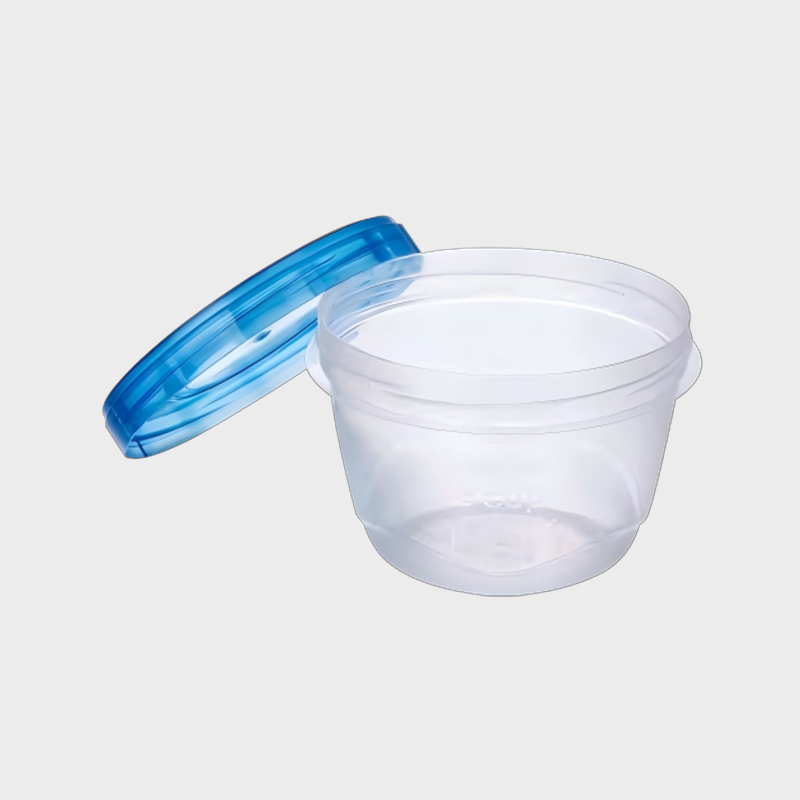 PFB019 473ml Round PP Ice Cream Storage Cup with Blue Lid Manufacturer, OEM/ODM Ningbo Panfeng Mould Plastic is China wholesale PFB019 473ml Round PP Ice Cream Storage Cup with Blue Lid manufacturer and company, we of...View Product →
How long can food stay frozen in a plastic container?
Most cooked meals keep good quality for 3 to 6 months at -18°C. Raw meat and fish last longer — 3 to 12 months depending on the cut — but the container itself does not limit that; flavor and texture do.
What to Look for When Buying Freezer-Ready Containers
When you buy freezer containers, the label matters more than the color or shape: check for the freezer-safe symbol, a resin code of 2, 4, or 5, and a lid that stays flexible when cold. For commercial buyers, wall thickness and lid gaskets are the two details that separate a long-lasting container from one that splits in the first month.
Ningbo Panfeng Mould Plastic Co., Ltd. manufactures PP and HDPE food containers with airtight locking lids and overmolded seals, and the factory supports OEM and ODM customization for restaurant, retail, and meal-prep brands. If you are sourcing freezer-safe containers in bulk, contact our factory with your target sizes and volumes.