

 Español
 Deutsch

A food safe plastic container is not defined by one label on the lid. It is the combination of a resin approved for food contact, additives and colorants that stay locked inside the polymer, a seal that still works after repeated washing, and documents that prove all three. If a supplier answers your question with "BPA free" and nothing else, you do not yet have enough information to place an order.
Food contact is regulated on evidence rather than appearance. Four variables decide whether a container is safe in practice, and each one can be measured or documented before you commit to a purchase order.
The Four Variables That Decide Food Safety
Food safety on a plastic container comes down to four checkable variables, and a weakness in any one of them cancels the other three.
Resin grade and migration limits
Only a small group of polymers belongs in direct contact with food, and the grade matters as much as the polymer name.
Polypropylene and high-density polyethylene are the workhorses of food packaging: chemically stable, resistant to fats and acids, and easy to mould to a repeatable wall thickness. PET is chosen for cold clarity, polystyrene for low-cost rigidity, and both lose that advantage as soon as heat is involved.
Regulators do not certify a container as chemical free; they set limits. In the EU, food contact plastics must keep overall migration below 10 mg per square decimetre of surface area under the conditions of Regulation (EU) No 10/2011, and in the United States the resin has to appear in the relevant FDA regulation, such as 21 CFR 177.1520 for olefin polymers.
Additives, colorants, and recycled content
Colour and regrind are the two hidden variables in a cheap container.
A food contact colorant must be approved for the application and must not carry heavy metals that migrate into fatty food. Regrind is the bigger risk: recycled PP is acceptable for food contact only where a recognised recycling process and supporting migration data exist. If a supplier cannot say where the regrind came from or at what ratio it is blended, treat that quotation as a non-food-contact product.
Seal and lid design
A perfect resin still fails if the lid opens inside a delivery bag.
Look at how the seal is made. A soft silicone gasket compresses and recovers; a hard plastic-on-plastic lip depends on moulding tolerance that drifts as the tool wears. Vented lids release steam during reheating, so a container reheated with the vent closed will lift its own lid. Hinged lids cut assembly cost, but hinge fatigue appears at the thousands-of-cycles mark, which is exactly where a reusable container should earn its keep.
Documentation
Food safety claims are only as strong as the paperwork behind them.
Three documents do most of the work: a declaration of compliance listing the resin and each additive by CAS number, a migration test report from an accredited laboratory covering the food types and temperatures you actually intend to use, and factory certification covering quality systems and social responsibility.
| Resin | Typical food contact use | Microwave | Notes for buyers |
|---|---|---|---|
| PP | Takeaway boxes, bento trays, fresh-keeping boxes | Yes | Best all-round choice; rigid, heat tolerant, clear in thin walls |
| HDPE | Jugs, cutting boards, opaque tubs | No | Cheap and tough, but opaque and softens well below PP |
| PET | Cold cups, salad bowls, dessert lids | No | Excellent clarity; deforms near 70 °C, so cold chain only |
| PS | Cold cups, party plates, cake bases | No | Stiff and inexpensive, unsuitable for hot or fatty food |
| PLA / CPLA | Cutlery, cold cups, disposable bowls | No | Compostable story, lower heat resistance, higher unit cost |
Can You Microwave a Food Safe Plastic Container?
Yes, but only when the container is polypropylene and that specific shape has been tested for reheating. Polystyrene, PET and polycarbonate should stay out of the microwave however the packaging is worded.
Heat brings two problems at once: distortion and faster migration. Fatty dishes reach higher surface temperatures than water-based ones, so a container that stays rigid under soup can soften under curry. Reheat with the lid loose or removed unless it is a tested vented design, and never seal a hot container straight into a delivery bag.
For caterers and meal-prep kitchens, a two-compartment PP container with a vented lid reheats a main and a side together without mixing them.
Seals and Lids: Where Most Complaints Start
Most returns are not caused by the resin; they are caused by a lid that stops sealing after a few dishwasher cycles.
Ask what the gasket is made of and how it is held in the lid. Silicone gaskets resist heat and oils, while cheap TPE blends harden, flatten and leak. A practical acceptance test is to fill the container to its fill line, close it, invert it and hold it for ten minutes, after five dishwasher cycles at 65 °C. A container that survives that will survive a delivery bag, a freezer and a stacked shelf.
The material and seal factors behind a dependable food-grade container are covered in more detail in this guide to what makes a food-grade plastic fresh-keeping box reliable.
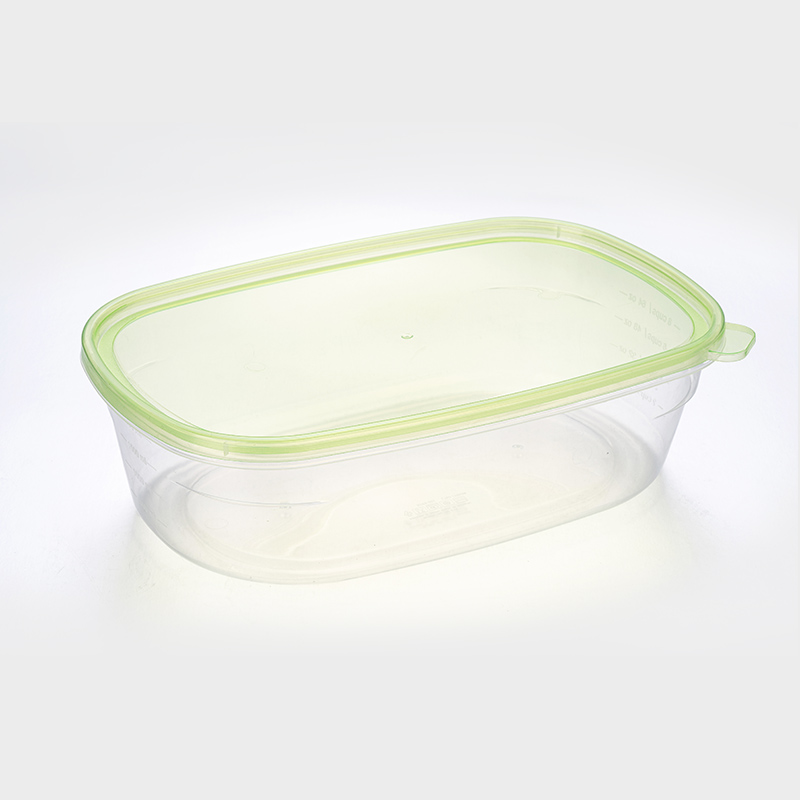 Customizable Rectangular Airtight PP Food Storage Containers PFB015For sample approval, measure material and seal performance; this customizable airtight PP container offers 2.4 L capacity, silicone gasket, and stackable modular storage.View Product →
What to Measure Before You Approve a Sample
Approve a sample only after you have measured it, not after you have looked at it.
- Wall thickness at five points from top to bottom: a spread above 0.2 mm predicts warping in the dishwasher.
- Capacity to the fill line, not to the brim. Rounded capacities can hide 5 to 8 percent of shortfall.
- Lid removal force with a spring gauge, measured again after ten open-and-close cycles.
- Gasket compression and recovery after a 65 °C dishwasher cycle.
- Thermal cycling: five dishwasher cycles, twenty-four hours in a freezer, then a one-metre drop onto concrete.
- Documents: declaration of compliance, migration report and factory certification, each dated within the last two years.
Weight, Wall Thickness, and Cost: Reading a Quotation Honestly
Two quotations for the same 1000 ml container can differ by 30 percent in weight, and that difference shows up in the unit price, the leak rate and the freight bill.
Resin is usually the largest single cost in a moulded container, so weight is the first number to compare. Ask for the net weight of box and lid separately, the regrind ratio and the tolerance on wall thickness. A thinner wall flexes when the container is stacked, distorts under hot food and often needs a heavier lid, which quietly adds back the grams you thought you saved. Packaging, minimum order quantity and tooling amortisation belong on their own lines, not folded into the unit price.
A 9.5 L PP storage box that keeps its shape when stacked full weighs more than a thin-wall lookalike, and usually costs less per year of use because it is not replaced.
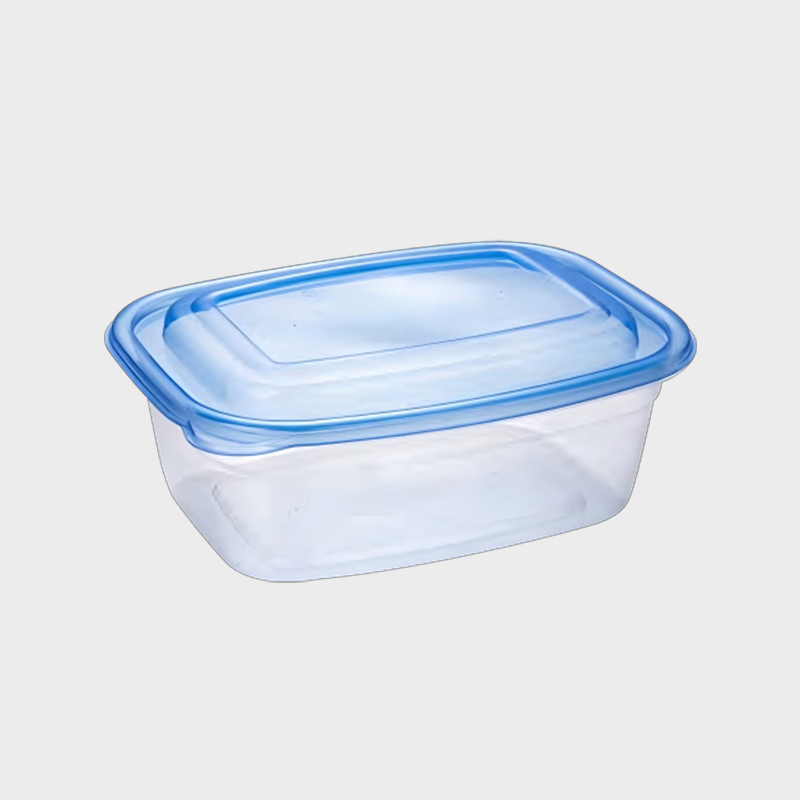 9.5L Large Capacity PP Food Storage Box PFB001For buyers tracking material certificates and process control, this durable 9.5 L PP box with matching lid suits bulk produce storage.View Product →
Why Process Control Matters More Than One Certificate
A material certificate proves what went into one batch; process control proves what happens on every order.
The checks that matter sit at the start and the end of the line: verifying incoming resin against the declaration of compliance instead of trusting the label on the bag, controlling colour and regrind doses, monitoring wall thickness during the run, leak testing at the end, and keeping traceability by cavity and shift so a problem can be traced to a few hours rather than a few thousand cartons.
How a factory organises those checks, from raw material to finished carton, is set out in our factory and quality control overview.
Frequently Asked Questions
Are reusable plastic containers safer than disposable ones?
Not automatically. Safety comes from the material and the seal, not from the number of uses. Reusable containers, however, are judged over hundreds of wash cycles, so gasket quality matters far more than it does in a single-use box.
What does BPA free actually tell me?
It tells you one additive is absent. It says nothing about which resin was used, which colorants were added, or whether the container was tested for migration at the temperature you plan to use.
How often should food containers be replaced?
Replace any container that is scratched, cloudy, or still smells of old food after washing, because scratches hold residue and make cleaning unreliable. In commercial kitchens, a six to twelve month review cycle is easier to enforce than a judgement call by each member of staff.
Food safe plastic containers are a specification, not a slogan: the right resin, controlled additives, a seal that recovers, and paperwork you can file. Buyers who ask for those four things before the first order spend less time arguing about claims and more time repeating orders that arrive exactly as approved.