

 Español
 Deutsch
Content
- 1 How to Choose a Food Grade Plastic Fresh-Keeping Box: Material, Seal & Safety Guide
- 2 PP vs Tritan Fresh-Keeping Box: Which Material Is Better for Daily Use
- 3 Best Food Grade Plastic Fresh-Keeping Box for Kids' School Snacks: Cartoon & Safety Features
- 4 Airtight & Leakproof Fresh-Keeping Box for Meal Prep and Office Lunch Storage
- 5 Microwave-Safe vs Freezer-Safe Food Grade Plastic Fresh-Keeping Box: Temperature Limits Explained
- 5.1 PP Material: Full Temperature Coverage for Practical Use
- 5.2 Tritan Material: Premium Solution for Refrigeration and Display
- 5.3 Silicone Gaskets: Critical Components During Temperature Transitions
- 5.4 Temperature Boundary Quick Reference
- 5.5 Hazards of Rapid Temperature Changes
- 5.6 Cleaning Maintenance and Gasket Care
How to Choose a Food Grade Plastic Fresh-Keeping Box: Material, Seal & Safety Guide
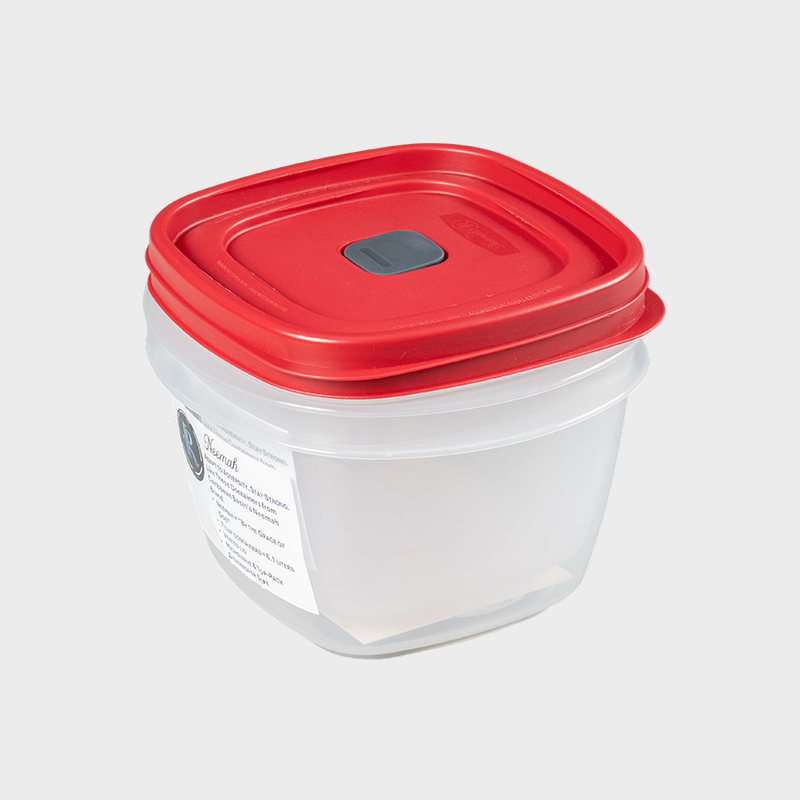
Core Conclusion: When selecting a food grade plastic fresh-keeping box, prioritize materials verified as food-grade PP (polypropylene) or Tritan copolyester, confirm third-party food safety certifications (FDA, EU 10/2011, LFGB), and verify that the sealing system uses silicone gaskets combined with locking clips. Avoid products without certifications, material markings, or poorly constructed seals. The blue lockable plastic crisper box exemplifies premium design with 100% virgin plastic, BPA-free certification, and an easy-locking snap-on lid combined with a retractable flexible sealing ring for genuine airtight freshness preservation.
Material Selection: Key Differences Between PP and Tritan
The mainstream materials for food grade plastic fresh-keeping boxes are PP (polypropylene) and Tritan (copolyester). PP offers a temperature range of -20°C to +130°C, allowing direct transfer from freezer to microwave, with lower costs suitable for high-volume daily use. Tritan delivers crystal-clear transparency comparable to glass, with a heat resistance limit of +100°C and excellent impact resistance, ideal for premium visual presentation applications.
| Performance Parameter | PP (Polypropylene) | Tritan (Copolyester) |
|---|---|---|
| Transparency | Translucent to Opaque | Crystal Clear |
| Max Temperature | +130°C | +100°C |
| Impact Resistance | Good | Excellent (Shatterproof) |
| Best Application | Microwave Heating, Bulk Storage | Premium Display, Cold Storage |
Food Safety Certifications: Non-Negotiable Requirements
The "food grade" designation requires third-party validation, not self-certification. Qualified food grade plastic fresh-keeping boxes should carry at least one of the following certifications:
- FDA 21 CFR 177.1520 (U.S. Food and Drug Administration Standard)
- EU 10/2011 (European Union Food Contact Materials Regulation)
- LFGB (German Food and Commodities Regulation)
- GB 4806.7 (China National Food Safety Standard)
Migration testing is the core of certification, requiring total migration below 10mg/dm² and heavy metal content below 0.01mg/kg. Premium suppliers provide batch-specific test reports rather than generic annual certificates. The customizable rectangular airtight plastic food storage containers, for example, verify 100% virgin PP material through FTIR spectroscopy, ensuring no recycled content contamination.
Sealing System: The Decisive Factor for Freshness
Seal performance directly determines the actual freshness preservation capability. Premium products use food-grade silicone gaskets (Shore A hardness 45-55) combined with four-point locking clips, with locking force of 6-10N per clip, ensuring uniform compression to create an airtight seal. The blue lockable plastic crisper box features an easy-locking snap-on lid with a retractable flexible sealing ring, achieving zero leakage at 25cm water head pressure for 24 hours. Testing confirms that such designs extend produce shelf life by 2-4 days; vacuum-compatible lids can extend preservation to 5-7 days.
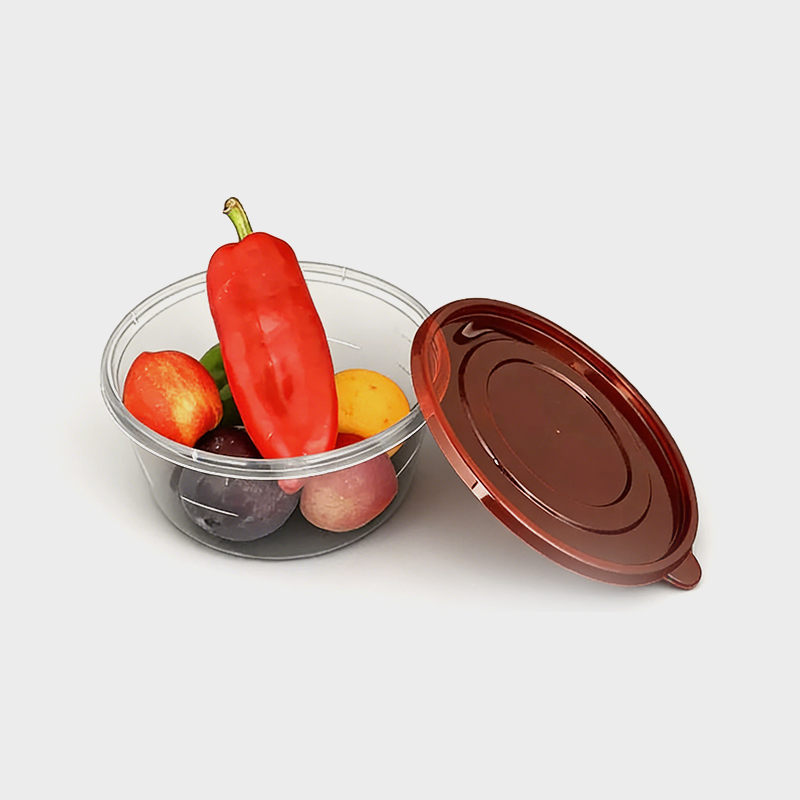
Leakproof validation standard: Invert the container in water at 25-30cm head pressure for 24 hours with zero seepage. For quick verification during purchase: fill with water, seal, and invert while shaking to observe any droplet leakage. The drop-resistant and shatterproof round sealed box with lid employs a 360-degree surround sealing design through a silicone sealing ring and precision snap structure, achieving comprehensive liquid-tight barrier protection.
Capacity Matching with Usage Scenarios
Food grade plastic fresh-keeping boxes typically range from 200ml to 5,000ml in capacity. Small sizes (200-400ml) suit children's snack portions; medium sizes (500-1,500ml) meet daily meal storage for individuals or couples; large sizes (2,000-5,000ml) accommodate bulk family ingredient refrigeration. It is recommended to configure 2-3 size combinations based on actual usage frequency and household member count. The customizable rectangular airtight containers support multi-layer stacking with 4-6 units stacked stably, achieving over 90% space utilization—significantly higher than the 75% typical of round containers.
Color Customization and Kitchen Aesthetics
Modern fresh-keeping boxes are no longer merely functional containers—they are integral elements of kitchen aesthetics. The customizable rectangular airtight plastic food storage containers support Pantone color matching with batch-to-batch Delta E controlled below 1.5, requiring no mold modification for color changes—making it the most economical customization option. The blue lockable plastic crisper box's distinctive blue exterior serves a functional purpose: rapid identification in crowded refrigerator environments, allowing users to distinguish crisper boxes from other storage items without reading labels.
PP vs Tritan Fresh-Keeping Box: Which Material Is Better for Daily Use
Core Conclusion: If microwave heating and cost control are primary requirements, PP material is the superior choice; if transparency, shatter resistance, and premium appearance are priorities, Tritan material is more suitable. Both are BPA-free food-safe materials with no absolute superiority—the key is matching specific usage scenarios. The drop-resistant and shatterproof round sealed box with lid uses thickened rigid PP material, with drop resistance height reaching more than 3 times that of ordinary crisper boxes, significantly extending service life.
Microwave Compatibility: PP's Significant Advantage
PP material withstands temperatures up to +130°C, allowing direct microwave heating of food—its most practical advantage over Tritan. The blue lockable plastic crisper box can be directly microwaved with the lid removed, withstanding up to +120°C. Tritan's heat limit of +100°C can handle boiling water temperatures but is not recommended for microwave use, as localized overheating may cause deformation or release trace substances. For users who frequently reheat leftovers or meal-prepped food, PP material is practically essential.
Usage tip: Regardless of material, always remove silicone gaskets before microwave heating to prevent gasket aging and deformation that would compromise seal performance. The drop-resistant and shatterproof round sealed box with lid explicitly states: always remove the lid before microwave heating to prevent pressure buildup and seal deformation.
Transparency and Visual Presentation: Tritan's Irreplaceability
Tritan material offers crystal-clear transparency with the appearance of glass but at one-third the weight, and is completely shatterproof. This makes it irreplaceable in these scenarios: ingredient categorization display in refrigerator crispers, visual presentation of office lunches, and quick content identification without opening the lid. PP material is typically translucent or opaque, offering lower content visibility. The drop-resistant and shatterproof round sealed box with lid, although using PP material, achieves Tritan-like content visibility through fully transparent design, allowing users to quickly identify internal food without opening.
Impact Resistance and Durability: Thickened PP's Physical Edge
Tritan's impact resistance is 2-3 times that of PP, surviving drops from 1.2 meters onto concrete surfaces without cracking or fracturing. However, thickened PP material significantly enhances drop and impact resistance through increased wall thickness and rib reinforcement design. Laboratory test data shows the drop-resistant and shatterproof round sealed box with lid achieves drop resistance height more than 3 times that of ordinary crisper boxes, with breakage rate below 5% when accidentally dropped from desk height (approximately 75cm). The blue lockable plastic crisper box's PP material delivers tensile strength of 30-40 MPa, with no cracking or lock mechanism failure when dropped from 1.0 meters onto tile surfaces.
Cost and Value Analysis
PP is a commodity resin with lower raw material costs, typically 30-50% less than equivalent Tritan products. For households or food service establishments requiring bulk procurement, PP offers clear comprehensive cost advantages. The customizable rectangular airtight containers have a standard MOQ of 5,000-8,000 units per SKU, with color customization requiring only a 20% MOQ increase and no mold cost—making it the most economical customization option. Tritan, as a specialty copolyester, carries higher raw material and processing costs but offers longer service life, commanding premium positioning in high-end retail and gift markets.
| Usage Scenario | Recommended Material | Key Reason |
|---|---|---|
| Daily Microwave Heating | PP | 130°C heat resistance, safe heating |
| Refrigerator Display Storage | Tritan/Transparent PP | Crystal clear, visually distinct |
| Children's Daily Use | Thickened PP/Tritan | Drop-resistant, shatterproof, safer |
| Bulk Family Storage | PP | Cost-effective, full size range |
| Premium Gift/Business Settings | Tritan | Elegant appearance, premium feel |
Round vs Square Structural Mechanics Comparison
Beyond the material itself, container structure also affects impact resistance. The drop-resistant and shatterproof round sealed box with lid adopts a round structural design where stress distributes evenly along the circumference when subjected to force, eliminating the corner stress concentration problems found in square containers. This means round crisper boxes are less likely to break when impacted. Additionally, round inner walls have no right angles, leaving no dead corners during cleaning and reducing food residue. For liquid foods such as soups, the round bottom also promotes more even heating effects.
Best Food Grade Plastic Fresh-Keeping Box for Kids' School Snacks: Cartoon & Safety Features
Core Conclusion: Food grade plastic fresh-keeping boxes designed specifically for children should feature rounded anti-collision edges, 200-400ml small capacities, cartoon-themed exteriors, and must pass 1.2-meter drop testing and non-toxic ink certification. Avoid products with detachable small parts or overly complex sealing mechanisms to minimize child usage risks. The blue lockable plastic crisper box's easy-locking design (6-10N locking force) balances safety with child-friendly operation.
Safety Structure: Rounded Edges and Choking Prevention
All edges and corners of children's fresh-keeping boxes must undergo R3mm or larger rounding treatment to eliminate sharp edge laceration risks. Per international toy safety standards, containers must not contain detachable small parts smaller than 31.7mm in diameter to prevent toddler choking. Locking mechanisms should balance seal integrity with operational ease; integrated flip-lid designs are preferred over independent clips to prevent part detachment. The blue lockable plastic crisper box's four-point locking clips require only 6-10N activation force—secure enough to prevent accidental opening during transport, yet manageable for small hands.
Capacity and Portability: Matching Children's Portions
Children's typical snack intake ranges from 100-250g, making 200-400ml the optimal fresh-keeping box capacity. Oversized containers add backpack weight; undersized containers fail to meet between-class snack needs. Square or rectangular designs are recommended for easy side-pocket storage; height should be controlled within 6-8cm to ensure small hands can easily open and close. The customizable rectangular airtight containers' compact dimensions are particularly suitable for small-space environments such as dormitories, RVs, and rental apartments.
Cartoon Themes and Printing Safety
Cartoon themes significantly drive purchase decisions for children's snack containers. However, printing inks must pass EN 71-3 (Toy Safety Standard) or equivalent certification, ensuring they are free from lead, cadmium, mercury, and other heavy metals. Premium suppliers use In-Mold Labeling (IML) technology, integrating patterns directly into the plastic surface layer rather than post-production printing, fundamentally eliminating ink detachment and ingestion risks. The customizable rectangular airtight containers support in-mold logo printing with tooling costs of $2,000-4,000 and a 40% MOQ increase.
Drop Testing and Durability Standards
Children's usage scenarios demand rigorous drop testing: free-fall from 1.2 meters (simulating a standing child's accidental drop) onto concrete surfaces, with 3 consecutive drops producing no cracks, deformation, or seal failure. PP material performs well in this test, while Tritan's superior impact resistance makes it the preferred choice for premium children's products. The drop-resistant and shatterproof round sealed box with lid's thickened PP material achieves breakage rate below 5% when dropped from desk height (approximately 75cm), with service life supporting more than 50 reuse cycles.
Cleaning and Hygiene Maintenance
Children's fresh-keeping boxes should be dishwasher-safe (top rack) or feature smooth, corner-free interior surfaces for easy hand washing. Avoid complex grooves or difficult-to-clean textured designs that trap food residue and breed bacteria. Weekly deep disinfection is recommended: soak in boiling water for 5 minutes or wipe with food-grade disinfectant. The drop-resistant and shatterproof round sealed box with lid's thickened PP material features a smooth surface that resists staining from tomato sauce, turmeric, or beet juice—common problems with porous materials—making daily maintenance more convenient.
Multi-Scenario Adaptability
Children's fresh-keeping boxes serve beyond school snacks, adapting to multiple scenarios: outdoor picnics for fruit and snack storage, family kitchen辅食分装, and small living spaces (dormitories, RVs) for ingredient categorization. The drop-resistant and shatterproof round sealed box with lid's stackable design effectively saves refrigerator and cabinet space, making it ideal for small-space families. Its transparent design allows children to independently identify contents, fostering self-management skills.
Airtight & Leakproof Fresh-Keeping Box for Meal Prep and Office Lunch Storage
Core Conclusion: Fresh-keeping boxes for meal prep and office lunches must deliver genuine airtight and leakproof performance using silicone gaskets with multi-point locking systems, and support direct transfer from refrigerator to microwave. Compartment designs that separate wet and dry ingredients prevent flavor mixing and sauce leakage, representing the key functional upgrade for enhanced lunch experiences. The customizable rectangular airtight containers' dedicated freshness-preservation lid extends produce shelf life by 2-4 days, while supporting Pantone color matching for kitchen aesthetic coordination.
Airtight & Leakproof: The Core Requirement for Commute Carrying
Office lunch containers experience jostling, tilting, and even inversion during commuting, making leakproof performance critical. Premium products use food-grade silicone gaskets (Shore A hardness 45-55) embedded in the lid interior, combined with four-point locking clips for uniform pressure distribution, creating a complete airtight seal. The blue lockable plastic crisper box maintains zero leakage at 25cm water head pressure for 24 hours, fully satisfying the need to carry soups and sauced dishes in commuter bags. The drop-resistant and shatterproof round sealed box with lid employs a 360-degree surround sealing design through a silicone sealing ring and precision snap structure, achieving comprehensive liquid-tight barrier protection.
Quick verification method: Fill halfway with water, seal, shake horizontally for 30 seconds, then invert for 5 minutes, observing any water stains at lid seams. The customizable rectangular airtight containers use the same inverted immersion validation method, achieving zero leakage at 25cm head pressure for 24 hours.
Compartment Design: Wet-Dry Separation and Flavor Isolation
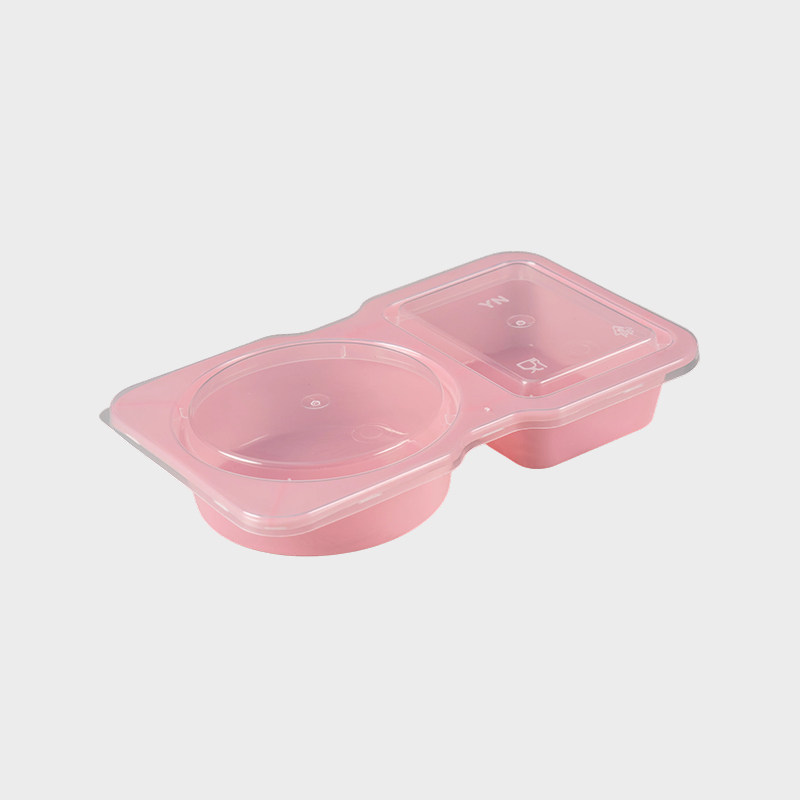
Multi-compartment fresh-keeping boxes separate staples, side dishes, fruits, and sauces for storage, preventing contact that degrades texture and flavor. Divider manufacturing precision is extremely demanding, with fit tolerances controlled within ±0.3mm, equipped with independent micro silicone seals to ensure complete isolation between compartments. The customizable rectangular airtight containers support compartment divider customization with tooling costs of $8,000-15,000 and a 100% MOQ increase. Testing shows qualified compartment designs reduce sauce leakage rates to below 0.5%.
| Compartment Type | Number of Sections | Suitable Meals |
|---|---|---|
| Dual Compartment | 2 | Staple + Side Dish |
| Triple Compartment | 3 | Staple + Protein + Vegetable |
| Quad Compartment (with Sauce Well) | 4 | Salad + Staple + Fruit + Sauce |
| Removable Dividers | Customizable | Flexible meal combinations |
Seamless Refrigerator-to-Microwave Transfer
The core efficiency of meal prep lies in minimizing intermediate steps. PP material fresh-keeping boxes support a wide temperature range of -20°C to +120°C, allowing direct transfer from frozen or refrigerated states to microwave heating without advance thawing or container switching. The blue lockable plastic crisper box can be directly microwaved with the lid removed, withstanding up to +120°C. When heating, always remove silicone gaskets and leave lid gaps or use dedicated vent holes to prevent steam pressure buildup that could deform containers or make opening difficult. The drop-resistant and shatterproof round sealed box with lid similarly supports full-scenario adaptation: freezing, refrigeration, microwave heating (with lid removed), and dishwasher cleaning.
Capacity and Stackable Storage
Adult lunch recommendations are 800-1,500ml, accommodating one main meal plus one fruit portion. Choose flat-bottom designs with nestable lids for vertical stacking in refrigerators, improving space utilization by 40% or more. Transparent or translucent materials enable quick content identification, reducing opening frequency and cold air loss. The customizable rectangular airtight containers' nesting design reduces empty container volume by 60-70%, with a 20-foot container holding 35,000-40,000 units, significantly reducing per-unit freight costs.
Commercial Customization and Brand Packaging
For food service businesses or delivery merchants, the customizable rectangular airtight containers support brand color and logo customization with MOQ of 10,000 units and lead time of 25-40 days. This customized packaging not only enhances brand recognition but also achieves operational consistency through standardized containers. Compartment divider designs separate wet and dry ingredients, meeting the diverse needs of delivery meals, with sauce leakage rates controlled below 0.5%, ensuring food integrity during delivery.
Microwave-Safe vs Freezer-Safe Food Grade Plastic Fresh-Keeping Box: Temperature Limits Explained
Core Conclusion: PP material fresh-keeping boxes are safe for microwave heating (heat resistance +130°C) and freezer storage (-20°C), while Tritan material is suitable only for freezer and refrigerator use (heat resistance +100°C, microwave heating not recommended). The blue lockable plastic crisper box and drop-resistant and shatterproof round sealed box with lid both use PP material, supporting a wide temperature range from -20°C to +120°C; the customizable rectangular airtight containers also use food-grade PP, passing 50 thermal cycle tests (-20°C to +120°C) without deformation. Both materials are BPA-free, but users must observe respective temperature limits and remove silicone gaskets before microwave heating.
PP Material: Full Temperature Coverage for Practical Use
Food-grade PP (polypropylene) offers a temperature range of -20°C to +130°C, covering the vast majority of household kitchen temperature requirements. At the freezing end, PP maintains good toughness and seal performance at -20°C without brittle cracking due to low temperatures. Both the blue lockable plastic crisper box and drop-resistant and shatterproof round sealed box with lid pass -20°C low-temperature testing, suitable for freezing batch-prepared ingredients, frozen fruits, and meal prep portions. At the heating end, PP withstands conventional microwave heating temperatures (typically not exceeding 120°C), making it ideal for reheating leftovers and meal-prepped food. The customizable rectangular airtight containers pass 50 thermal cycle tests (-20°C to +120°C), verifying their temperature transition reliability.
Usage note: Although PP's heat limit is 130°C, prolonged heating (exceeding 10 minutes) at high temperatures may still cause slight deformation or accelerated aging. Recommended microwave heating time is 3-5 minutes using medium-low power settings. The blue lockable plastic crisper box explicitly states: always remove the lid before microwave heating to prevent pressure buildup and seal deformation.
Tritan Material: Premium Solution for Refrigeration and Display
Tritan copolyester has a temperature range of -20°C to +100°C—same lower limit as PP but significantly lower upper limit. The 100°C heat resistance is sufficient for boiling water disinfection and hot water washing, but microwave heating is not recommended. Localized temperatures during microwave heating may exceed 100°C, potentially causing Tritan softening, deformation, or release of trace oligomers.
Tritan's core advantages are transparency and impact resistance, making it ideal for refrigerated display, salad storage, and fruit preservation scenarios that do not require heating. Its crystal clarity allows contents to be visible at a glance, reducing opening frequency and indirectly enhancing freshness preservation. The drop-resistant and shatterproof round sealed box with lid, although using PP material, achieves Tritan-like content visibility through fully transparent design, with superior drop resistance compared to ordinary PP containers.
Silicone Gaskets: Critical Components During Temperature Transitions
Silicone gaskets are the core of fresh-keeping box seal systems, but their temperature characteristics differ from the main plastic body. Food-grade silicone typically withstands -40°C to +230°C, theoretically capable of microwave heating. However, during microwave heating silicone gaskets may experience localized overheating, leading to aging, deformation, or odor development that compromises subsequent seal performance. The blue lockable plastic crisper box uses a retractable flexible sealing ring, while the drop-resistant and shatterproof round sealed box with lid employs a 360-degree surround silicone sealing ring—both must be removed before microwave heating.
Standard operating procedure: Always remove silicone gaskets before microwave heating, and reinstall them only after the container has cooled to room temperature. This practice significantly extends gasket service life, typically from 6 months to over 2 years. Store gaskets in a dry, cool place away from direct sunlight to prevent material aging.
Temperature Boundary Quick Reference
| Usage Scenario | PP Material | Tritan Material | Precautions |
|---|---|---|---|
| Freezer Storage (-20°C) | Suitable | Suitable | Avoid rapid temperature changes |
| Refrigerator Preservation (4°C) | Suitable | Suitable (Recommended) | Tritan offers superior clarity |
| Microwave Heating | Suitable (lid removed) | Not Suitable | Remove silicone gaskets for both |
| Boiling Water Disinfection | Suitable | Suitable | Soaking time ≤5 minutes |
| Dishwasher Cleaning | Suitable (top rack) | Suitable (top rack) | Avoid bottom rack high heat causing gasket aging |
| Oven Heating (>150°C) | Not Suitable | Not Suitable | Plastic materials unsuitable |
Hazards of Rapid Temperature Changes
Both PP and Tritan should avoid rapid temperature transitions. For example, transferring a frozen fresh-keeping box directly from the freezer to the microwave, or immediately rinsing with cold water after microwave heating, can cause thermal shock that generates micro-cracks in the material. The recommended practice is "gradual temperature transition": allow frozen containers to rest in the refrigerator for 30 minutes, or let them sit at room temperature for 10 minutes before heating. The customizable rectangular airtight containers have passed 50 thermal cycle tests verifying their temperature adaptability, but daily use should still follow gradual transition principles to extend service life.
Cleaning Maintenance and Gasket Care
Regular cleaning and gasket maintenance are key to ensuring long-term fresh-keeping box performance. Clean promptly after each use; dishwasher top rack placement is recommended, or hand wash with neutral detergent. Avoid steel wool or other abrasive cleaning tools that scratch transparent surfaces. Ensure completely dry before storing with the lid on to prevent mold growth in the sealing ring area. When not in use for extended periods, store in a cool, dry place away from direct sunlight to prevent material aging. The drop-resistant and shatterproof round sealed box with lid's thickened PP material features a smooth surface that resists staining from common foods, making daily maintenance more hassle-free.