

 Español
 Deutsch
Content
- 1 How to Choose the Right Plastic Disposable Fast Food Box for Your Restaurant
- 1.1 Material Selection: The Comprehensive Advantages of PP
- 1.2 Capacity Matching: Precise Selection Based on Food Type
- 1.3 Structural Design: Leak-Proof and Stacking Performance
- 1.4 Reusable vs. Disposable: Full Life-Cycle Cost Analysis
- 1.5 Procurement Recommendations: Supplier Qualifications and Sample Testing
- 2 PP vs PS Disposable Fast Food Box: Which Is Better for Hot Food Delivery
- 3 Are Plastic Disposable Fast Food Boxes Safe for Microwave Heating
- 4 Best Plastic Disposable Fast Food Box for Takeaway and Food Delivery Business
- 5 What Size Plastic Disposable Fast Food Box Is Suitable for Meal Prep and Catering
How to Choose the Right Plastic Disposable Fast Food Box for Your Restaurant
Core Conclusion: When selecting plastic disposable fast food boxes, prioritize PP (polypropylene) material, match capacity from 500ml to 1200ml based on food type, and ensure leak-proof sealing structure. For high-frequency usage scenarios, reusable food-grade PP containers (reusable for more than 50 cycles) offer a more economical and environmentally friendly choice.
Material Selection: The Comprehensive Advantages of PP
PP (polypropylene, resin code #5) is currently recognized as the best material for disposable fast food boxes. Its melting point reaches 165°C and heat deflection temperature up to 130°C, significantly exceeding PS material (melting point approximately 100°C, heat deflection temperature approximately 80°C). This means PP containers can safely hold freshly cooked hot food, with recommended holding temperature not exceeding 120°C. Additionally, PP material is tough and resistant to breakage, reducing transportation damage rates by approximately 35%, while supporting recycling and reuse, aligning with global environmental trends.
Unlike disposable PS containers, food-grade PP material contains no plasticizers and will not release harmful substances during microwave heating, ensuring food safety. All products have passed food contact material safety certifications and are supported by a comprehensive quality traceability system.
Capacity Matching: Precise Selection Based on Food Type
Different foods have specific container capacity requirements:
| Capacity | Dimensions (mm) | Weight | Application Scenarios |
|---|---|---|---|
| 500ml | 170×120×45 | 22g | Small portions, salads, desserts |
| 650ml | 185×135×50 | 26g | Standard fast food, bento, rice bowls |
| 750ml | 195×145×55 | 30g | Large portions, noodle soup, spicy hot pot |
| 1000ml | 220×160×60 | 36g | Family size, multi-person portions |
| 1200ml | 240×180×65 | 45g | Extra large, hot pot delivery, banquet packaging |
Structural Design: Leak-Proof and Stacking Performance
Quality fast food boxes should adopt snap-fit or embedded sealing designs to ensure tight lid-to-body fit. For noodle soup, spicy hot pot, and other soup-based dishes, styles with dual sealing ribs are recommended. Premium designs also feature silicone sealing rings combined with snap structures to achieve 360-degree surround sealing, which not only prevents liquid food from leaking during transportation but also effectively isolates air, extending food freshness.
In terms of stacking performance, the box body should have sufficient compression strength to withstand multi-layer stacking pressure (recommended minimum 10kg) without deformation. Reusable containers feature nesting designs with nesting ratios of 3.5:1 to 4.5:1, reducing shipping volume by 70% to 75%. A 20-foot container holds approximately 35,000 to 40,000 units versus 10,000 to 12,000 for non-nesting designs.
Reusable vs. Disposable: Full Life-Cycle Cost Analysis
From a full life-cycle cost perspective, although reusable containers have a higher initial procurement cost, after more than 50 uses, their per-use cost becomes significantly lower than that of disposable containers. According to industry calculations, one reusable container can replace approximately 100 disposable meal boxes during its lifetime, reducing carbon emissions by over 60% and waste by over 90%.
| Comparison Dimension | Reusable Containers | Disposable Containers |
|---|---|---|
| Usage Count | 50-100 times | 1 time |
| Per-use Cost | Decreases with usage frequency | Fixed and unchanged |
| Sealing Performance | High (Precision snap + sealing ring) | Medium-Low (Simple locking) |
| Temperature Range | -20°C to 120°C | Typically 0°C to 70°C |
| Environmental Impact | Waste reduced by over 90% | Generates large amounts of plastic waste |
| Applicable Scenarios | Group meals, takeout, household meal prep | Temporary events, short-term use |
Procurement Recommendations: Supplier Qualifications and Sample Testing
Before bulk procurement, confirm that the supplier holds food contact material production licenses, ISO9001 quality management system certification, and international certifications such as FDA/EU. Request samples for sealing, heat resistance, and drop testing to ensure products meet actual usage scenarios. Standard specification stock products can be shipped within 3 to 7 days; customized products require 15 to 30 days production cycle (including mold development and sampling).
For group meal delivery and food delivery industries, leak-proof performance is directly related to customer satisfaction and brand reputation. It is recommended not to fill liquid foods beyond 80% of the container's capacity; avoid violent inversion or compression during transportation; and regularly inspect the sealing ring for aging or deformation.
PP vs PS Disposable Fast Food Box: Which Is Better for Hot Food Delivery
Core Conclusion: PP (polypropylene) material comprehensively outperforms PS (polystyrene) in heat resistance, safety, and environmental performance, making it the preferred choice for hot food delivery. PP containers can withstand extreme temperature ranges from -40°C to +120°C, with thermal cycling endurance exceeding 500 cycles, while PS deforms below 80°C and may release harmful substances.
Heat Resistance and Material Safety Comparison
PP material has a heat deflection temperature of approximately 130°C, while PS material is only about 80°C. This means PP containers can safely hold freshly cooked hot food, whereas PS containers may release harmful substances such as styrene monomers at high temperatures. Food-grade PP material is free of BPA, phthalates, and plasticizers, releasing no harmful substances during microwave heating, ensuring food safety.
From the perspective of molecular structure stability, PP material maintains structural stability under conventional microwave heating temperatures, while PS material carries the risk of molecular chain breakage in high-temperature environments. In actual testing, PP containers show no failure after 50 cycles of freezer-to-microwave thermal cycling, while PS containers exhibit softening and deformation upon first high-temperature contact.
| Comparison Dimension | PP (Polypropylene) | PS (Polystyrene) |
|---|---|---|
| Heat Deflection Temperature | ~130°C | ~80°C |
| Temperature Range | -40°C to +120°C | 0°C to 70°C |
| Microwave Safety | Safe | Unsafe |
| Material Toughness | High, resistant to breakage | Brittle, prone to cracking |
| Transportation Damage Rate | Reduced by approximately 35% | Relatively high |
| Thermal Cycling Endurance | Exceeds 500 cycles | Less than 10 cycles |
| Environmental Performance | Recyclable and reusable | Difficult to degrade, low recycling rate |
| Policy Trends | Market mainstream, continuous growth | Restricted in many countries |
Application Advantages of Dual and Triple Compartment Designs
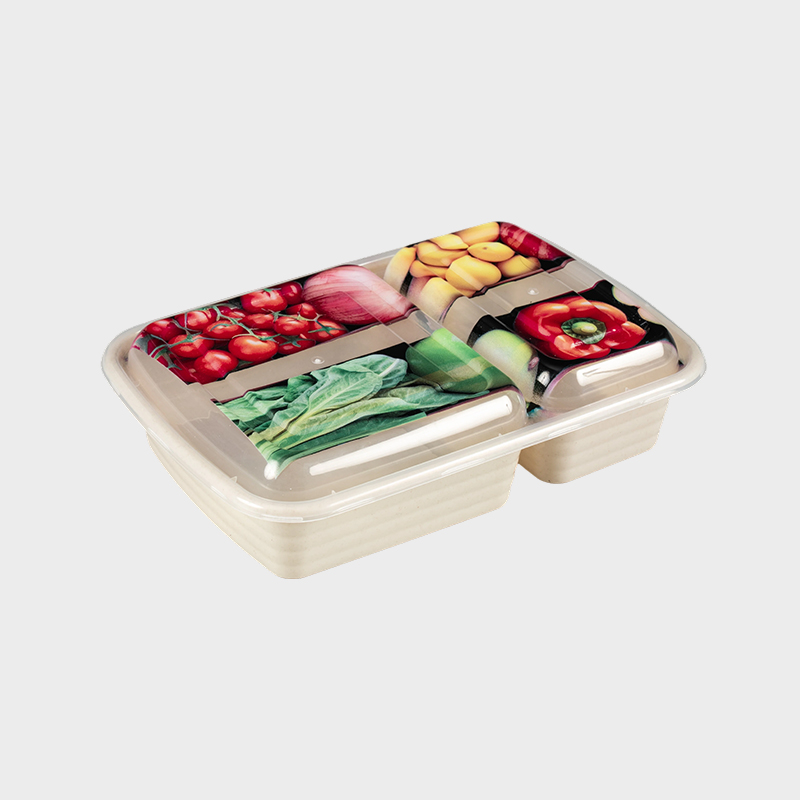
PP material is not only suitable for single-compartment containers but can also be manufactured into scientifically partitioned multi-compartment containers. Dual-compartment containers adopt a 60:40 or 70:30 golden ratio, with the large compartment suitable for staple foods (rice, noodles, etc.) and the small compartment for protein side dishes (meat, eggs, etc.), naturally separating proteins from vegetables while supporting balanced nutrition.
Triple-compartment containers feature a large + medium + small partition design, with the large compartment for staple foods, the medium for protein side dishes, and the small for fruits, vegetables, or soup. This design not only achieves nutritionally balanced meal combinations but also effectively prevents flavor mixing and cross-contamination between different foods. The divider wall height is 25-35mm with thickness 1.2-1.8mm, preventing liquid migration during transport while allowing steam circulation during microwave heating.
Sealing Technology and Transport Safety
PP containers can be equipped with advanced sealing systems. Premium designs use TPE gaskets with vent channels activating at 80-90°C internal pressure, preventing explosive pressure buildup without liquid ejection. Lock options include snap-tabs for consumers, integrated hinges for institutions, and tamper-evident seals for commercial food service.
In inverted water immersion testing, quality PP containers achieve zero leakage at 30cm depth for 24 hours. This sealing performance is critical for food delivery, effectively preventing soup spillage and enhancing customer satisfaction.
Environmental and Policy Orientation
PP material can be reprocessed into plastic pellets for producing non-food contact products such as trash bins, flower pots, and pipes, achieving resource recycling. In contrast, PS material is difficult to degrade and has a low recycling rate, and has been listed for restriction or prohibition in many countries. With the advancement of global "plastic restriction" policies, PP material is accelerating its replacement of PS and EPS (expanded polystyrene) to become the market mainstream choice.
Currently, some countries and regions have begun implementing deposit systems or categorized recycling incentive mechanisms for food containers, driving PP container recycling rates from the current less than 30% toward 60% and above.
Are Plastic Disposable Fast Food Boxes Safe for Microwave Heating
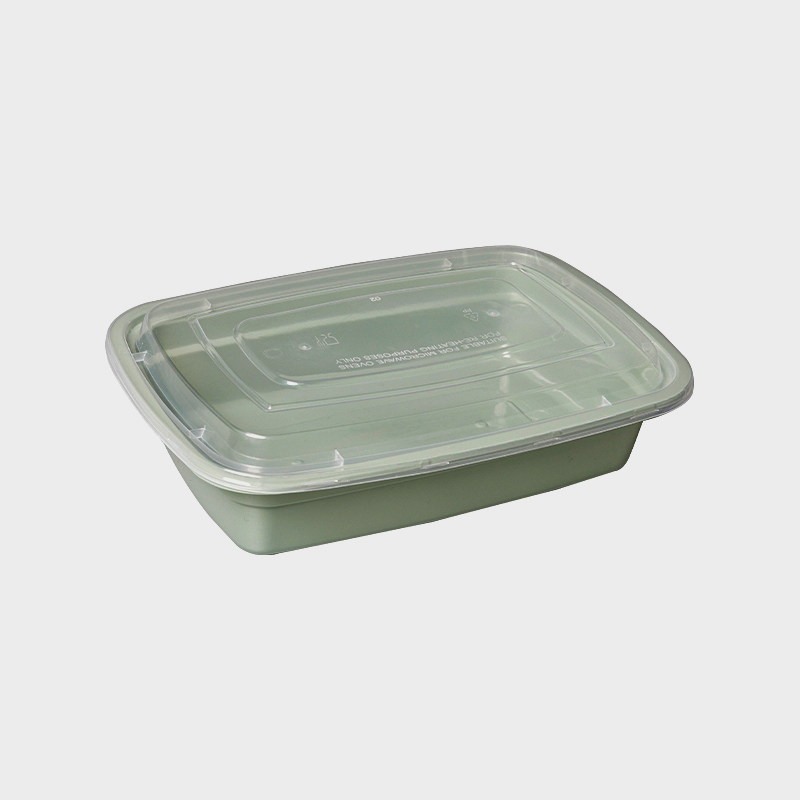
Core Conclusion: Food-grade PP (polypropylene, resin code #5) plastic disposable fast food boxes can be safely used for microwave heating, but proper operating procedures must be followed. PP material has a melting point as high as 165°C, heat deflection temperature of 130°C, and thermal cycling endurance exceeding 500 cycles, making it one of the few plastic materials suitable for microwave heating.
Safe Heating Principles of PP Material
PP material has a melting point as high as 165°C and a heat deflection temperature up to 130°C, making it one of the few plastic materials suitable for microwave heating. Its molecular structure is stable and does not release harmful substances under conventional microwave heating temperatures. Unlike PS material, PP contains no plasticizers and releases no BPA, phthalates, or other harmful substances during microwave heating, ensuring food safety.
From raw material procurement to finished product delivery, every process strictly adheres to ISO quality management system standards. All products have passed food contact material safety certifications and are supported by a comprehensive quality traceability system. Thermal cycling tests show that PP containers exhibit no failure after 50 cycles of freezer-to-microwave thermal cycling, with some high-quality products exceeding 500 cycles of thermal cycling endurance.
Safe Heating Operating Guidelines
Although PP material can withstand temperatures up to 130°C, safe heating still requires following these operational guidelines:
- Remove the lid or open the steam vent before heating to prevent steam pressure buildup. Premium designs with TPE gaskets and vent channels automatically activate at internal pressures of 80-90°C for safe pressure release
- Do not exceed 3 minutes per heating session
- Avoid heating empty containers
- Do not use to hold boiling hot pot broth or fried foods for extended periods to prevent localized overheating
- Avoid heating high-oil or high-sugar foods for extended periods to prevent localized overheating and container deformation
Materials Unsuitable for Microwave Heating
Not all plastic containers are suitable for microwave heating. The following materials should be avoided:
| Material | Resin Code | Microwave Suitability | Reason |
|---|---|---|---|
| PP (Polypropylene) | #5 | Safe | Heat deflection temperature ~130°C, stable structure, no plasticizers |
| PS (Polystyrene) | #6 | Unsafe | Releases styrene monomers at high temperatures |
| EPS (Expanded Polystyrene) | #6 | Unsafe | Deforms at high temperatures, releases harmful substances |
| PLA (Polylactic Acid) | #7 | Unsafe | Heat deflection temperature only ~60°C |
Temperature Control and Heating Uniformity
Although PP material can withstand temperatures up to 130°C, it is recommended that hot food holding temperature not exceed 120°C. During microwave heating, local food temperatures may exceed this limit, so controlling heating duration is crucial. The design of dual-compartment containers ensures heating uniformity, with compartment differential less than 10°C, preventing localized overheating.
Additionally, when removing from the refrigerator for microwave heating, allow the container to rest for 5 minutes to reduce thermal stress from temperature differences. PP containers with a temperature range of -40°C to +120°C support direct freezer-to-microwave use without thawing.
Reuse and Service Life Determination
PP containers can be reused for short-term use if structurally intact with no cracks or deformation, but long-term repeated use is not recommended. High-quality reusable PP containers can survive more than 200 dishwasher cycles and more than 500 thermal cycles. Clean with warm water (not exceeding 60°C) and neutral detergent, avoiding steel wool scrubbing.
Replacement is recommended when the following conditions occur: obvious scratches or whitening on the container surface; loose lid snaps resulting in poor sealing; container deformation preventing stable stacking; or usage has exceeded 50 cycles (disposable) or 500 cycles (reusable). Regular inspection ensures food safety and sealing performance.
Cleaning and Disinfection Requirements
It is recommended to clean promptly after use. They can be washed in a dishwasher using a high-temperature program (placed on the top rack), or hand-washed with neutral detergent. For commercial group meal scenarios, it is recommended to use high-temperature steam disinfection or UV disinfection cabinets to ensure compliance with food safety and hygiene standards. The gaps between triple-compartment dividers require special attention during cleaning; a soft brush can be used for thorough cleaning.
Best Plastic Disposable Fast Food Box for Takeaway and Food Delivery Business
Core Conclusion: Takeaway and food delivery businesses should select food-grade PP containers with leak-proof sealing structure and compression stacking performance, with 650ml to 1000ml as the mainstream capacity choice. For high-frequency delivery scenarios, reusable PP containers (reusable for more than 50 cycles with per-use cost decreasing with usage frequency) offer a more economical and environmentally friendly choice.
Core Requirements for Takeaway Scenarios
Food delivery has three core requirements for containers: leak-proof, heat retention, and compression resistance. Containers must withstand bumps and tilting during delivery without leaking soup; maintain food temperature to some degree; and resist deformation when stacked in multiple layers in delivery boxes. PP material containers, with their toughness and sealing design, can well meet these needs.
From a full life-cycle cost perspective, although reusable containers have a higher initial procurement cost, after more than 50 uses, their per-use cost becomes significantly lower than that of disposable containers. According to industry calculations, one reusable container can replace approximately 100 disposable meal boxes during its lifetime, reducing carbon emissions by over 60%.
Sealing and Leak-Proof Design
Quality takeaway containers should adopt snap-fit or embedded sealing designs with tight lid-to-body fit. Premium designs feature silicone sealing rings combined with snap structures to achieve 360-degree surround sealing, which not only prevents liquid food from leaking during transportation but also effectively isolates air, extending food freshness.
For noodle soup, spicy hot pot, and other soup-based dishes, styles with dual sealing ribs are recommended. In inverted water immersion testing, quality PP containers achieve zero leakage at 30cm depth for 24 hours. Transparent window lids allow consumers to visually inspect food status, enhancing appetite appeal and brand presentation. The box rim should feature rolled or thickened edges that are smooth and burr-free, preventing burns or scratches when consumers handle the container.
It is recommended not to fill liquid foods beyond 80% of the container's capacity; avoid violent inversion or compression during transportation; and regularly inspect the sealing ring for aging or deformation.
Capacity and Compartment Configuration
In takeaway business, different foods have different requirements for container capacity and structure:
| Food Type | Recommended Capacity | Recommended Structure | Key Features |
|---|---|---|---|
| Standard Fast Food/Bento | 650ml | Single or double compartment | Lightweight, good sealing |
| Noodle Soup/Spicy Hot Pot | 750ml | Single compartment | Dual sealing ribs, leak-proof |
| Set Meal/Multi-Dish Combo | 750ml-1000ml | Triple or quadruple compartment | Prevents flavor mixing, clear categorization |
| Family Size/Multi-Person Portions | 1000ml-1200ml | Single compartment | Large capacity, high compression resistance |
Application of Dual and Triple Compartment Designs
Dual-compartment containers adopt a 60:40 or 70:30 golden ratio, with the large compartment suitable for staple foods and the small compartment for side dishes, naturally separating proteins from vegetables while supporting balanced nutrition. The 32-ounce (946ml) total capacity aligns with adult satiety research, making it an ideal choice for office professionals.
Triple-compartment containers feature a large + medium + small partition design, with the large compartment for staple foods, the medium for protein side dishes, and the small for fruits or vegetables. This design not only achieves nutritional balance but also effectively prevents flavor mixing and cross-contamination between different foods. For children's use scenarios, the easy-open snap design balances airtightness with operational convenience, allowing children to use it independently.
Stacking and Transportation Performance
Delivery boxes typically require multi-layer stacking, so containers should have sufficient compression strength. It is recommended that containers withstand a minimum stacking pressure of 10kg without deformation. PP material performs excellently in this regard due to its toughness, reducing transportation damage rates by approximately 35% compared to PS material.
Reusable containers feature nesting designs with nesting ratios of 3.5:1 to 4.5:1, reducing shipping volume by 70% to 75%. Standardized size design helps improve delivery box space utilization and reduce logistics costs. A 20-foot container holds approximately 35,000 to 40,000 nesting containers versus 10,000 to 12,000 for rigid designs.
Brand Customization and Environmental Trends
Takeaway platforms can enhance brand recognition through customized container colors (white, black, transparent, or Pantone matching), printed brand logos, and QR codes. Customization options include:
- Pantone Color: MOQ increases by 20%, lead time extends by 3-5 days
- In-Mold Labeling (IML): MOQ increases by 50%, tooling cost $2,000-5,000, survives 300+ dishwasher cycles
- Post-Mold Printing: Cost $500-2,000, but wears after 50-100 cycles
Meanwhile, the recyclability of PP material aligns with environmental trends and helps improve brand image. It is recommended to label recycling symbols on takeaway packaging to guide consumers in proper sorting and disposal. Currently, recycled PP content has increased to 30% to 50%, and lightweighting programs target 15% to 20% weight reduction through structural optimization.
What Size Plastic Disposable Fast Food Box Is Suitable for Meal Prep and Catering
Core Conclusion: For meal prep and catering, select PP containers from 500ml to 1200ml based on serving size, food type, and delivery method. Single meal prep is recommended at 650ml standard size, while group catering is recommended at 750ml to 1000ml large capacity. Reusable containers (reusable for more than 50 cycles) can significantly reduce per-use cost and environmental burden in catering scenarios.
Size Selection for Meal Prep Scenarios
Meal prep typically requires preparing multiple portions in advance for refrigerated storage. For single-person single-meal portions, 650ml is the most suitable size, accommodating one staple food plus two side dishes, with a weight of only 26g, making it easy to stack and store. For calorie-controlled diet meals, 500ml is more appropriate, with moderate capacity that does not occupy excessive refrigerator space.
All sizes maintain structural stability at temperatures as low as -20°C, suitable for refrigerator storage. High-quality PP containers with a temperature range of -40°C to +120°C support direct freezer-to-microwave use without thawing, with thermal cycling endurance exceeding 500 cycles.
Size Configuration for Group Catering
Group catering (such as corporate lunches, event dining) typically requires large-capacity containers. The following are size recommendations for different catering scenarios:
| Scenario Type | Recommended Capacity | Serving Size | Core Advantages |
|---|---|---|---|
| Personal Meal Prep/Diet Meals | 500ml | 1 person | Lightweight, space-saving, 22g |
| Standard Single Serving | 650ml | 1 person | Mainstream size, fits most foods |
| Large Single/Small Double Serving | 750ml | 1-2 persons | Suitable for noodle soup, multi-dish combos |
| Corporate Catering/Event Dining | 1000ml | 1-2 persons | Large capacity, high compression resistance |
| Hot Pot/Banquet Delivery | 1200ml | 2-3 persons | Extra large capacity, 45g |
Nutritional Ratio Application of Compartment Design
For meal prep and catering scenarios requiring food separation, compartment design is particularly important. The 60:40 or 70:30 ratio of dual-compartment containers naturally separates proteins from vegetables, supporting balanced nutrient intake. The 32-ounce (946ml) total capacity aligns with adult satiety research, making it an ideal choice for fitness and weight management populations.
The large + medium + small partition design of triple-compartment containers places staple foods in the large compartment, protein side dishes in the medium compartment, and fruits or vegetables in the small compartment, not only achieving nutritional balance but also effectively preventing flavor mixing and cross-contamination between different foods. The divider wall height is 25-35mm with thickness 1.2-1.8mm, preventing liquid migration during transport while allowing steam circulation during microwave heating.
Manufacturing tolerance on compartment volume is held to ±2% to ensure consistent portion accuracy. For school nutrition programs, the dual-compartment design separates fruits from entrees to prevent spoilage while meeting national nutrition portion standards.
Refrigerated Storage Precautions
Meal prep and catering often involve refrigerated storage. The following points require attention:
- Allow food to cool to room temperature before refrigeration to prevent container deformation from placing hot food directly in the refrigerator
- Tightly seal the lid to prevent food odor mixing and moisture loss, extending freshness by approximately 1 to 2 days
- Avoid placing containers with high-fat content foods directly against the refrigerator back wall to prevent container embrittlement from fat solidification at low temperatures
- When removing from the refrigerator for microwave heating, allow the container to rest for 5 minutes to reduce thermal stress from temperature differences
- Ensure food has cooled sufficiently before refrigeration to prevent condensation buildup affecting seal performance
Special Requirements for Different Markets
Different markets have their own requirements for meal prep and catering containers:
Corporate Meal Prep: Office professionals need containers that move from fridge to microwave to dishwasher seamlessly. Key specs: stackability (nesting reduction of 60-65%), heating uniformity (compartment differential < 10°C), and dishwasher durability (> 200 cycles). Corporate wellness programs typically procure 500 to 5,000 units annually with branded customization.
School Lunch Programs: Schools require NSF certification, Prop 65 compliance, and heavy metal migration testing. The dual-compartment design separates fruits from entrees to prevent spoilage while meeting national nutrition portion standards. Target per-unit cost: under $2.50 amortized over 100+ uses.
Healthcare Dietary Management: Hospitals and nursing facilities use color-coded compartment containers to separate restricted diets (low-sodium, allergen-free) from standard items. Zero tolerance for additive migration is required—batch-level traceability and certificates of analysis are mandatory for every production lot.
Fitness and Weight Management: Athletes and weight-loss clients pay premium prices for precise macro tracking. The 32-ounce capacity with built-in portion ratios eliminates measuring tools. This segment drives demand for value-added features: volume markings, companion apps, and premium aesthetics.
Bulk Procurement and Inventory Management
Meal prep and catering businesses typically require large-volume procurement. It is recommended to maintain 2 to 4 weeks of safety stock to cope with supplier capacity fluctuations or logistics delays. Standard specification stock products can be shipped within 3 to 7 days; customized products require 15 to 30 days production cycle.
For large-volume procurement, sea freight or full container shipping is recommended to reduce costs; for urgent replenishment, air freight or express delivery can be selected. Calculate total cost per use cycle—not per-unit price—to evaluate true value. Standard MOQ is 3,000 to 5,000 units per SKU. Custom orders require 10,000 to 30,000 units.
For commercial group meal scenarios, it is recommended to use high-temperature steam disinfection or UV disinfection cabinets to ensure compliance with food safety and hygiene standards. The gaps between triple-compartment dividers require special attention during cleaning; a soft brush can be used for thorough cleaning.