

 Español
 Deutsch

Plastic containers with screw-on lids are rigid or semi-rigid plastic jars, tubs, or bottles with a continuous thread at the neck and a matching threaded cap. The practical answer is simple: choose a screw-on lid when you need a repeatable, leak-resistant seal for liquids, sauces, powders, or products that will be opened and closed many times. A 500 ml polypropylene jar with a food-grade liner can pass an inverted leak test and a filled drop test; the same body with a loose snap lid may seep at the first tilt. The difference is not just the word “screw” on the specification sheet. It is thread fit, liner compression, plastic grade, and torque control working together.
What Makes a Screw-On Lid Leak-Resistant?
A screw-on lid seals by compression, not simple contact: the cap pulls a gasket or liner against the container rim and holds it under controlled pressure. That continuous compression closes the leak path around the full circumference. Most failures come from four points: a mismatched neck finish, too little or too much torque, a liner that is too hard or too thin, and a rim with flash or molding stress. For a liquid product, “tight” is not a specification. A useful torque range, a defined liner, and a leak test are.
Ask for the closure system as one unit—container, cap, and liner—rather than buying them separately and hoping the threads match. The neck finish should specify diameter, thread pitch, and sealing land. A 24/410 jar and a 24/410 cap may still fail if the liner land is different or if the cap bottoms out before the liner compresses. In bulk purchasing, request a 24-hour inverted leak test, a drop test at the filled weight, and a torque release check after 24 hours. Those three tests catch more problems than a visual inspection.
Which Plastic and Liner Combination Fits the Job?
PP is usually the safest first choice for food containers with screw-on lids because it balances heat tolerance, chemical resistance, and cost; PET is better when clarity sells the product; HDPE suits opaque industrial and dairy formats; PS fits cold, dry, or display-led uses but is brittle.
| Plastic | Best for | Screw-lid notes | Buyer check |
|---|---|---|---|
| PP | Sauces, meal prep, hot fill, pantry storage | Good heat and chemical resistance; often paired with PE foam, EVA, or silicone liners | Confirm microwave and dishwasher claims for body and lid |
| HDPE | Dairy, dry goods, industrial storage | Opaque and moisture-resistant; less suited to premium clarity | Check stress-crack resistance and liner food-contact status |
| PET | Retail display, dry foods, cold products | Clear and rigid; limited hot-fill tolerance | Avoid hot filling unless the grade and cap are rated for it |
| PS | Cold foods, dry goods, display packs | Clear and low cost; brittle under impact | Not ideal for hot, oily, or heavy-fill products |
Liner choice matters as much as plastic. A PE foam liner suits dry powders and general food storage; EVA or silicone gives better recovery for repeated opening; induction foil creates a tamper-evident seal for retail liquids. For oily sauces, test the liner against the product because oil can migrate through some low-cost foams. For hot fill, confirm the cap and liner temperature rating, not only the container body.
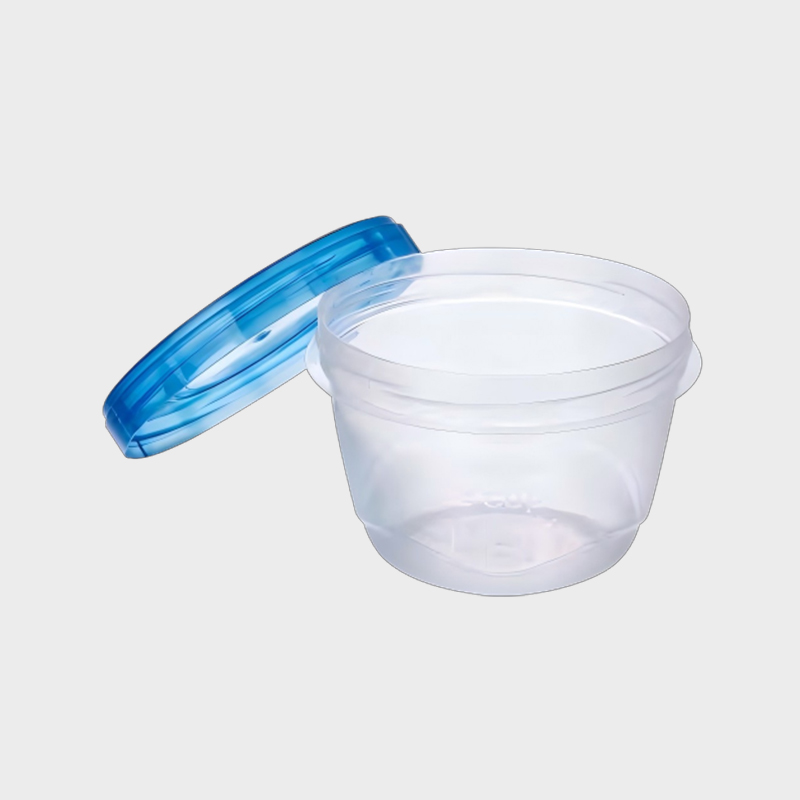 PFB019 473 ml Round PP Ice Cream CupA 473 ml food-grade PP round cup with blue friction-fit lid, suited to ice cream, gelato and frozen dessert packaging.View Product →
Small round PP cups are common for desserts, samples, and condiments; confirm the cap thread, liner, and torque range before approving the sample.
Which Closure Type Should You Specify?
Continuous-thread screw caps give the most predictable seal for liquids, while lug-style and plug-style closures trade some leak resistance for opening speed or dry-goods convenience.
| Closure type | How it seals | Best use | Watch-out |
|---|---|---|---|
| Continuous thread with liner | Liner is compressed against the rim | Liquids, sauces, dressings, repeated opening | Torque and liner fit must be controlled |
| Continuous thread with molded plug | Plug enters the neck and contacts the bore | Dry goods and powders | Less reliable for thin liquids |
| Lug-style twist | Short interrupted threads pull the cap down | Jams, preserves, ambient foods | Closure alignment can vary |
| Snap or latch, not screw | Plastic interference or gasket pressure | Dry storage and pantry use | Not a substitute for a tested screw seal |
What Should You Check Before Buying in Bulk?
A screw-on lid is compatible only when the neck finish, thread pitch, gasket land, and torque target match the container and filling line.
- Neck finish and thread standard, including diameter and pitch
- Liner material, thickness, and food-contact declaration
- Applied torque range and removal torque after 24 hours
- Filling temperature and cooling shrinkage
- Inverted leak test, filled drop test, and vibration test
- Stack load, carton compression, and pallet pattern
- Odor, taste, and migration reports for the finished article
For a new project, approve a drawing and a physical sample before mass production. Check the cap at the filling temperature, after cooling, and after 24 hours because plastic relaxes. A cap that feels tight on the line can loosen in the warehouse. Also confirm dishwasher and microwave claims; “microwave safe” applies to the container and lid together only if both are rated for it. Venting matters: a sealed screw lid on hot food can create pressure and pull the liner when opened.
Where Do Plastic Containers with Screw-On Lids Work Best?
Screw-on plastic containers are strongest in food service, retail sauces, bakery, meal prep, and non-food storage where a secure repeatable closure matters more than one-hand access.
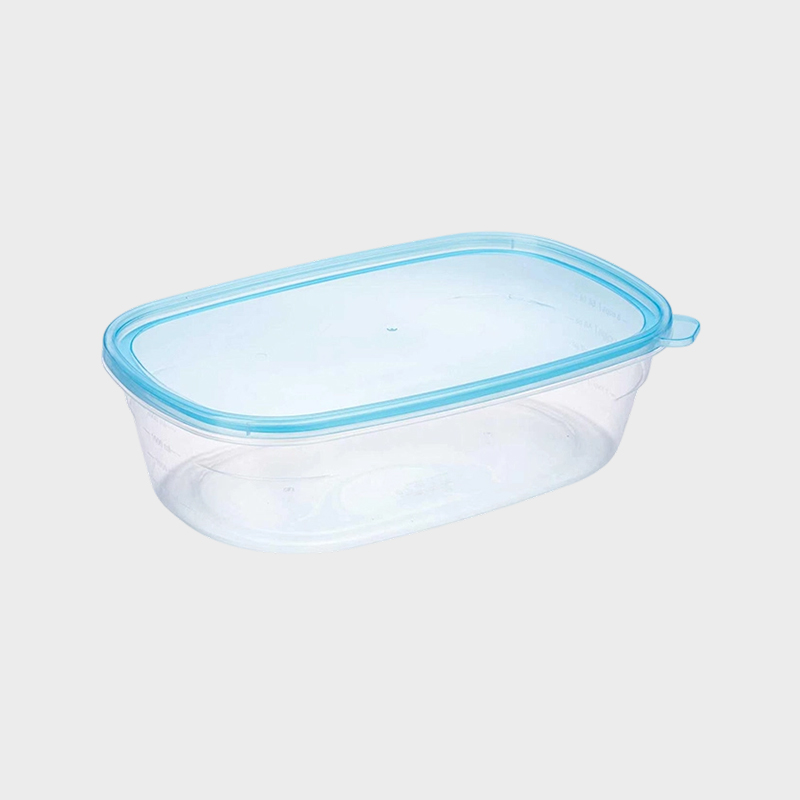
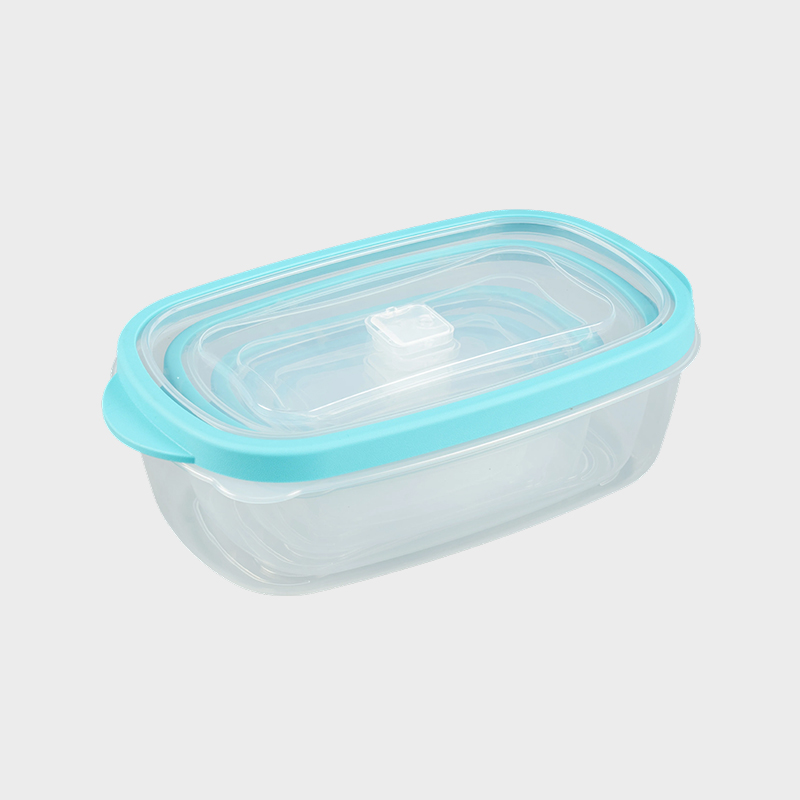
In food service, 250 ml to 1 L jars work for sauces, dressings, cut fruit, and overnight oats. In retail, clear PET or PP jars with induction seals present products well and provide tamper evidence. In bakery and frozen dessert, high-cylinder cups keep portions neat and stackable. For pantry storage, larger PP containers with wide mouths are easier to fill and clean. The fresh-keeping box range covers rectangular and round food-storage formats; verify the closure type on each item because airtight, snap, and screw lids are not interchangeable.
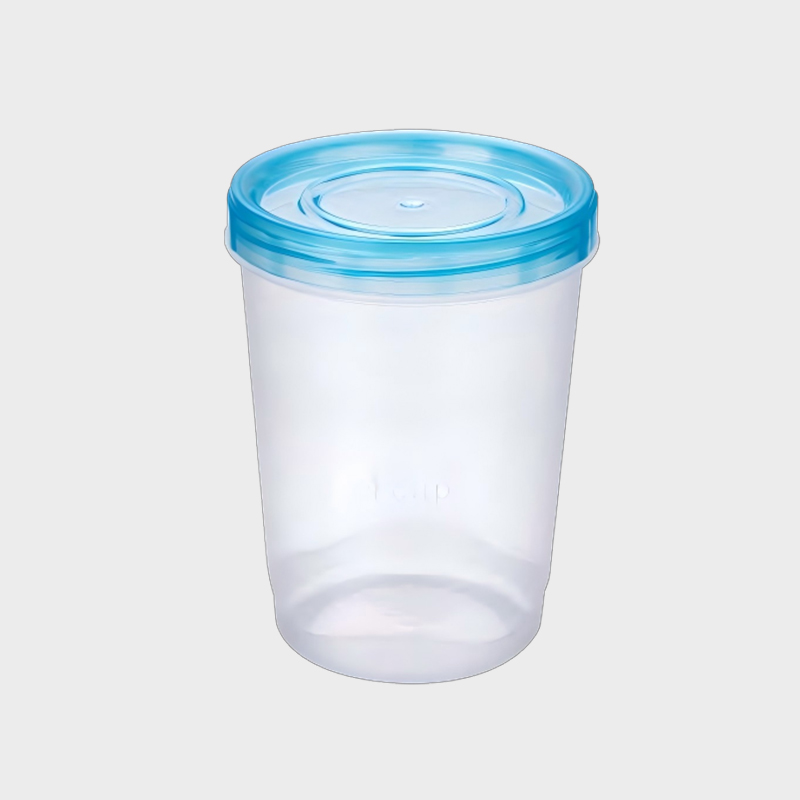 PFB020 946 ml High-Cylinder Frozen Dessert CupA 946 ml high-cylinder PP cup with blue sealing lid and stackable design for commercial frozen dessert storage.View Product →
A 946 ml high-cylinder PP cup is a practical format for frozen dessert and portioned foods; test the cap at the actual fill temperature and stacking load.
How Should a Bulk Order Be Inspected?
For bulk orders, the pass/fail criteria should be written before samples are approved; visual checks alone will not catch a slow leak.
- Dimensional check on neck finish, cap, and liner land
- Application and removal torque measured on production samples
- 24-hour inverted leak test using the real product or a representative liquid
- Drop test at the declared filled weight and drop height
- Cap fit after cooling, stacking, and transport simulation
- Food-contact report and migration test for the specific colorant and plastic
If the container is exported to the EU, the US, or the Middle East, confirm the food-contact declaration and test report for the finished article. A “food-grade” label on a quote is not a substitute for a current report. For OEM projects, keep the approved sample and the test record together; that file becomes the reference when production restarts months later.
What Matters in OEM Production?
A screw-lid container project succeeds when the manufacturer controls the container, cap, liner, and torque specification as one system; buying them from separate suppliers usually shifts the leak risk to you.
For custom work, define the fill volume, product pH, oil or alcohol content, filling temperature, closure torque, labeling method, and packing format. Those inputs determine wall thickness, neck finish, liner, and carton design. A manufacturer with in-house molding and a documented quality system can adjust the thread and rim together instead of forcing a stock cap onto a modified jar. Ningbo Panfeng Mould Plastic Co., Ltd. operates a Ningbo production base, offers OEM and ODM support, and reports that its phase II plant increased capacity by 40%. For projects that need custom formats, the plastic storage box options show the range of sizes and constructions available for review.
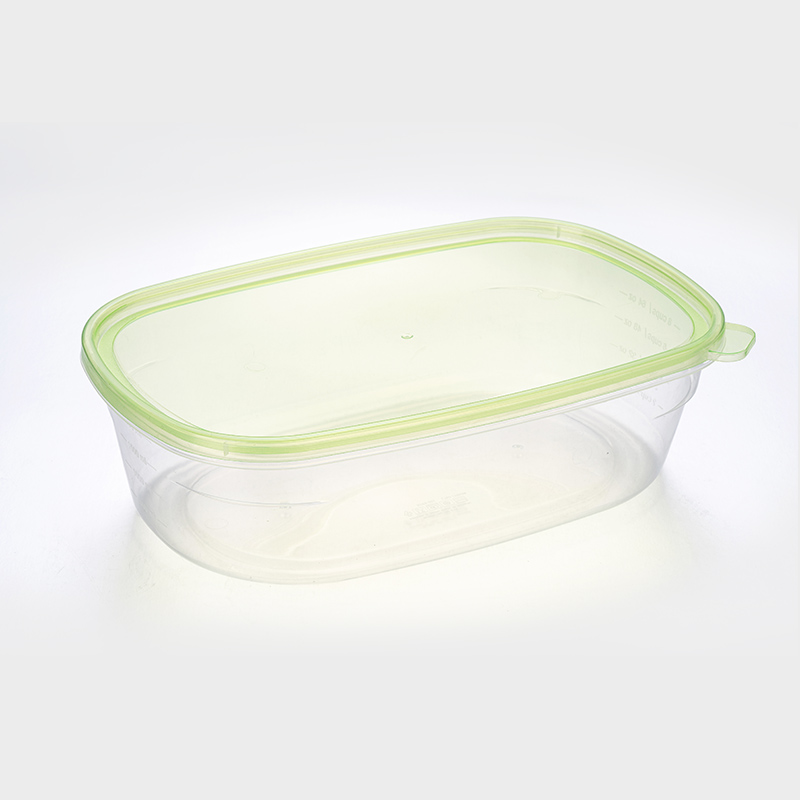 PFB015 Customizable Rectangular Airtight Food Storage ContainersCustomizable 2.4 L food-grade PP rectangular containers with airtight silicone-gasket lids and stackable nesting for kitchen or branded packaging.View Product →
Customizable food-storage formats are useful for private-label programs; approve the liner and torque range before artwork or mold work begins.
FAQ
The answers below focus on the checks that most often decide whether a screw-lid container passes or fails in real use.
Are screw-on lids leak-proof?
They can be leak-resistant, but “leak-proof” should be tied to a test; a lined screw cap that passes a 24-hour inverted test at the specified torque is a more useful claim than a generic label.
Which plastic is best for hot sauce or oily dressing?
PP is usually the first candidate because it handles heat and oils better than PET or PS; the liner and cap material must also be rated for oil and heat.
Can I use the same cap on different jars?
Only if the neck finish, thread pitch, liner land, and torque target match; the same diameter alone does not make a closure compatible.
What should a bulk order inspection include?
Include dimensional checks, torque, inverted leak testing, drop testing, liner fit, odor, and food-contact documentation; test the filled pack, not just the empty container.