 Home / Products / Plastic Disposable Fast Food Box / Microwave-Safe Double-Compartment Plastic Food Container
 Details
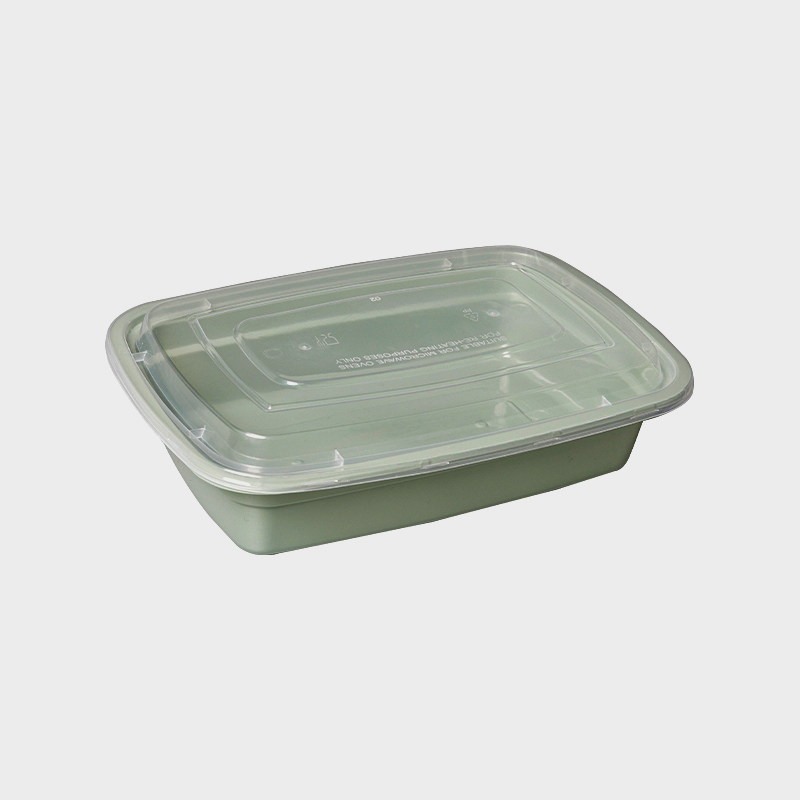
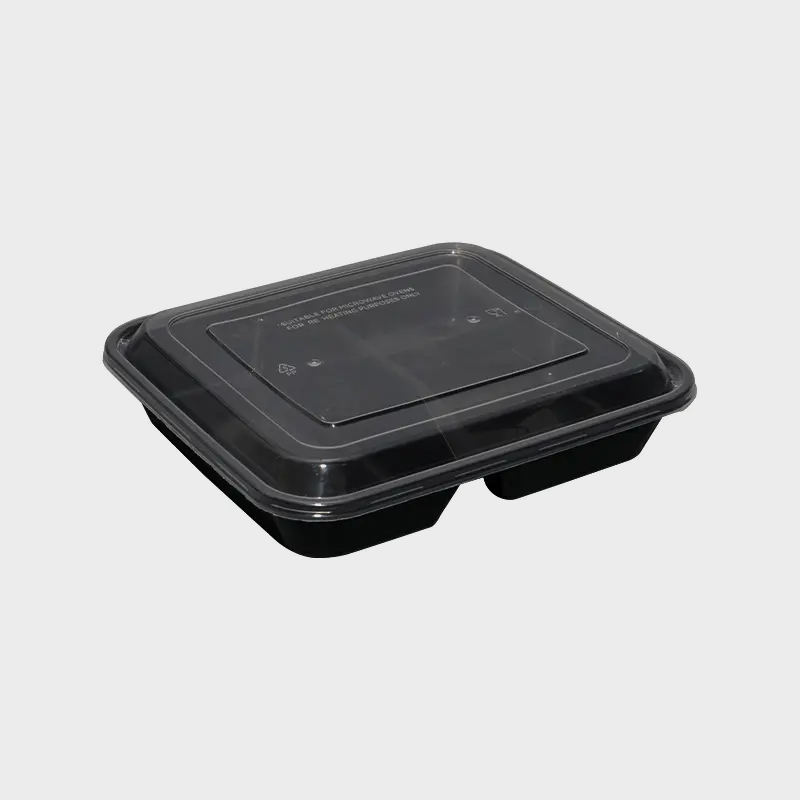
Microwave-safe double-compartment plastic food container is a high-quality food storage product optimized for meal preparation. It boasts superior versatility and durability, far surpassing ordinary food storage containers. The Microwave-safe double-compartment plastic food container features a scientifically designed 32-ounce (approximately 946 ml) capacity with double compartments, allowing for precise portion control. Made from premium food-grade materials, it can withstand extreme temperatures from -40°C to +120°C, and is microwave-safe, dishwasher-safe, and freezer-safe. More robust and durable than similar products, it is reusable, effectively saving time and costs in daily meal preparation, and fully meeting the needs of healthy meal planning in schools, offices, and everyday life.
Product Features:
Precise Dual-Compartment Portion Control:
Features a two-compartment integrated design with a total capacity of 32 ounces. The ounce size is designed to meet daily needs for satiety and healthy eating, allowing for separate servings of main dishes and side dishes to prevent flavor mixing.
High cost-effectiveness and practicality: Reusable multiple times, more durable than similar lunchboxes, reducing the cost of disposable lunchboxes while simplifying meal preparation and saving time.
Premium and durable materials: Made with high-grade food-safe materials, sturdy and damage-resistant, with a longer lifespan, meeting the needs of frequent meal preparation and use.
Temperature resistant and versatile: Withstands temperatures from -40℃ to + Within a 120℃ temperature range, there is no risk of leakage of harmful chemicals. It supports microwave heating, dishwasher cleaning, and freezing, offering multi-purpose convenience.
Supporting Healthy Eating: Adaptable to various weight loss and healthy meal preparation plans, precise portion control regulates dietary intake, easily achieving a balanced nutritional intake for daily meals.
Application Scenarios:
Office Daily Meal Preparation: Suitable for office workers to prepare lunch and dinner in advance. The double compartments allow for separate preparation of staple foods and vegetables. Supports direct microwave heating and dishwasher cleaning, meeting the convenience needs of office settings.
School Lunch Box Use: Can be used as a student lunchbox. The double-compartment design allows for separate storage of food and fruit. Freezing storage allows for advance meal preparation, and microwave heating is suitable for school dining scenarios. Easy to use.
Family Daily Meal Storage: Suitable for storing leftovers and portioning ingredients. Supports freezer storage of prepared meals. Dishwasher cleaning eliminates the need for manual handling, saving household chores time.
Weight Loss and Healthy Meal Preparation: Designed for the dietary needs of weight loss and fitness enthusiasts. 32 Precise portion control helps regulate meal intake, while the dual-compartment design facilitates the combination of carbohydrates and protein, aiding in the execution of a healthy meal preparation plan. Ideal for short trips and outings, meals and snacks can be packed in advance. The airtight lid prevents spills, and the food can be frozen for easy reheating on the go.

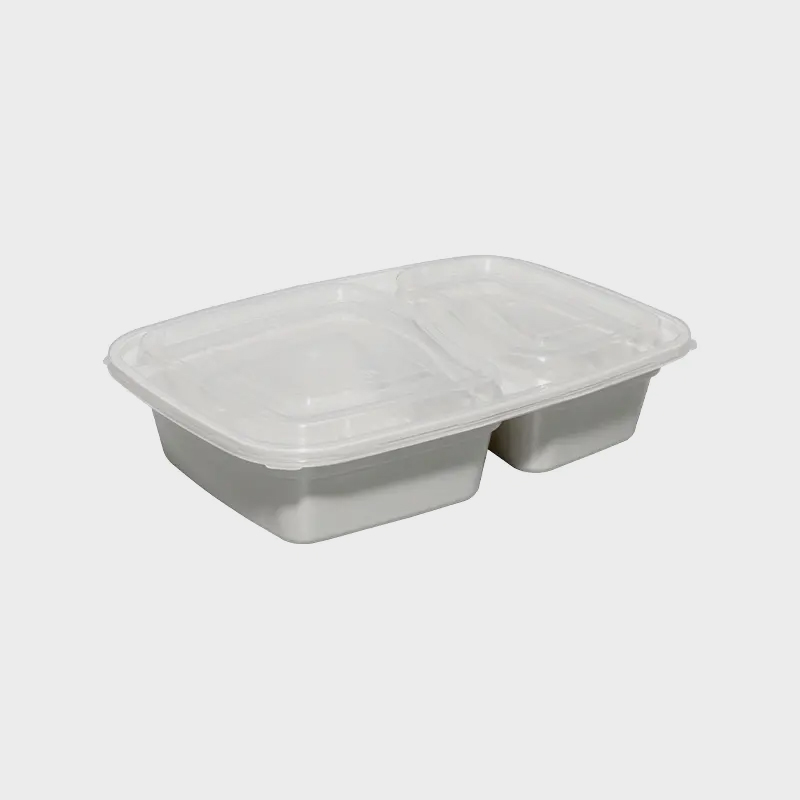
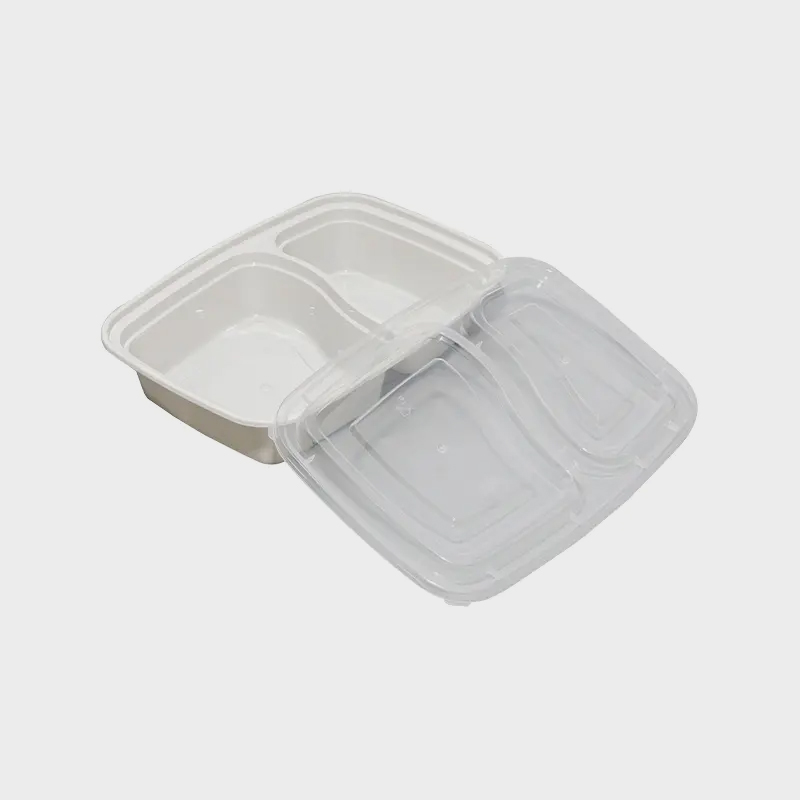
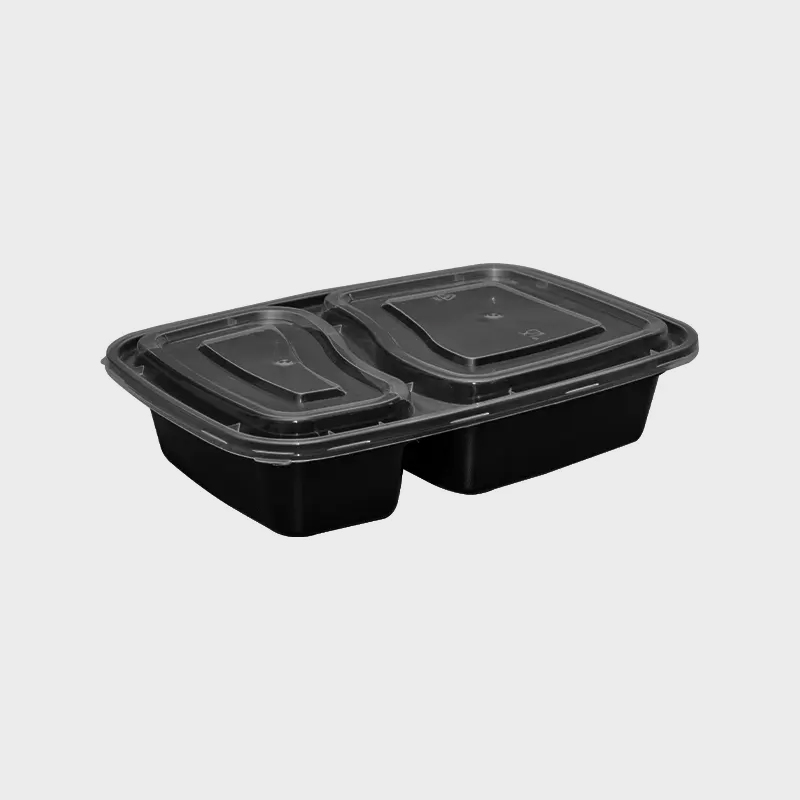
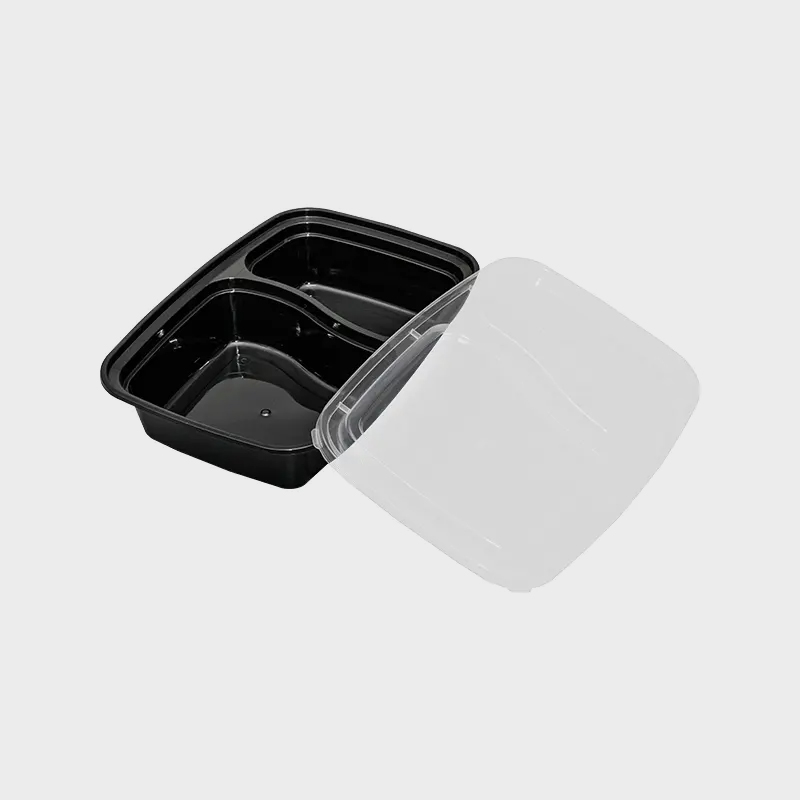
The microwave-safe double-compartment plastic food container is engineered for meal prep, institutional catering, and health-conscious consumers. As a leading microwave-safe plastic food container factory, we produce these containers with 32-ounce (946ml) capacity and scientifically proportioned dual compartments for precise portion control.
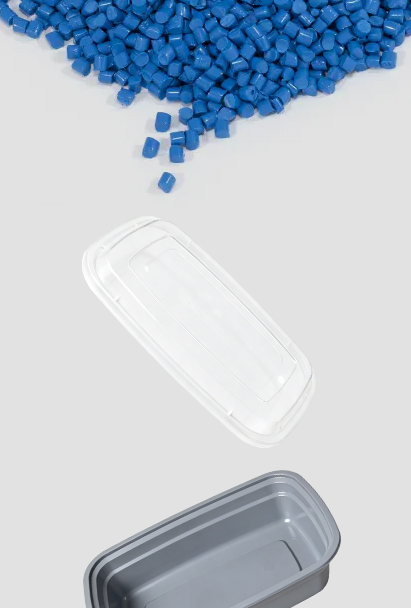
The body uses 100% food-grade polypropylene (PP, resin code #5) with a melting point of 165°C and heat deflection temperature of 130°C. This ensures safe microwave heating without releasing harmful substances—unlike PS or EPS alternatives that deform below 80°C and may leach styrene monomers.
| Parameter | Specification | Benefit |
|---|---|---|
| Total Capacity | 32 oz (946ml) | Optimal adult meal portion |
| Compartment Ratio | 60:40 or 70:30 | Balanced macro-nutrient intake |
| Temperature Range | -40°C to +120°C | Freezer-to-microwave direct use |
| Material | Food-grade PP (#5) | BPA-free, recyclable, durable |
| Reusability | >500 thermal cycles | Cost-effective vs. disposables |
The compartment plastic food container integrates three engineering systems that single-chamber containers cannot match: flavor isolation, thermal management, and seal integrity.
The divider wall (25-35mm height, 1.2-1.8mm thickness) prevents liquid migration during transport while allowing steam circulation during microwave heating. This eliminates sauce contamination between main dishes and sides—a common failure in inferior products. Manufacturing tolerance is held to ±2% on compartment volume to ensure consistent portion accuracy.
The lid creates an airtight seal for storage yet releases steam safely during heating. Premium designs use TPE gaskets with vent channels activating at 80-90°C internal pressure—preventing explosive pressure buildup without liquid ejection. Lock options include snap-tabs for consumers, integrated hinges for institutions, and tamper-evident seals for commercial food service.
Empty containers achieve nesting ratios of 3.5:1 to 4.5:1, reducing shipping volume by 70-75%. A 20-foot container holds approximately 35,000-40,000 units versus 10,000-12,000 for non-nesting designs—directly lowering per-unit freight costs by $0.15-0.25 on trans-Pacific routes.
The microwave-safe double-compartment plastic food container serves diverse markets, each with distinct procurement requirements.
Office professionals need containers that move from fridge to microwave to dishwasher seamlessly. Key specs: stackability (60-65% nesting reduction), heating uniformity (compartment differential < 10°C), and dishwasher durability (> 200 cycles). Corporate wellness programs typically procure 500-5,000 units annually with branded customization.
Schools require NSF certification, Prop 65 compliance, and heavy metal migration testing. The dual-compartment design separates fruits from entrees to prevent spoilage while meeting national nutrition portion standards. Target per-unit cost: under $2.50 amortized over 100+ uses.
Hospitals and nursing facilities use color-coded compartment plastic food containers to separate restricted diets (low-sodium, allergen-free) from standard items. Zero tolerance for additive migration is required—batch-level traceability and certificates of analysis are mandatory for every production lot.
Athletes and weight-loss clients pay premium prices for precise macro tracking. The 32-ounce capacity with built-in portion ratios eliminates measuring tools. This segment drives demand for value-added features: volume markings, companion apps, and premium aesthetics.
A credible microwave-safe plastic food container factory maintains rigorous process control and validation protocols.
Multi-cavity molds with hot runner systems and cavity pressure sensors maintain wall thickness consistency. Cycle times of 25-30 seconds balance efficiency with quality—aggressive speed compromises the dimensional stability required for reliable seal performance.
| Checkpoint | Method | Standard |
|---|---|---|
| Raw Material | FTIR, melt flow index | 100% virgin PP, MFI 8-12 |
| Dimensions | CMM, optical scanning | ±1.5mm, ±2% compartment volume |
| Seal Integrity | Inverted water immersion | Zero leakage at 30cm, 24h |
| Thermal Cycling | Freezer-to-microwave test | No failure after 50 cycles |
| Migration | GC-MS analysis | Total migration < 10mg/dm² |
Monthly batch-level migration testing provides substantive assurance versus annual certification renewals. Buyers should always request batch-specific test reports matching their production run.
Sourcing from a double-compartment fast food box supplier requires evaluation beyond unit price.
Before bulk ordering, test samples for: dimensional accuracy, seal performance with water/oil/acid simulants, microwave heating uniformity (thermal imaging), and dishwasher cycling durability. Lock approved specifications in a signed sample approval report.
| Option | MOQ Impact | Tooling Cost | Lead Time |
|---|---|---|---|
| Pantone Color | +20% | $0 | +3-5 days |
| In-Mold Logo | +50% | $2,000-5,000 | +7-10 days |
| Compartment Ratio | +100% | $8,000-15,000 | +15-20 days |
| Integrated Hinge | +80% | $5,000-10,000 | +10-15 days |
Standard MOQ is 3,000-5,000 units per SKU. Custom orders require 10,000-30,000 units. Calculate total cost per use cycle—not per-unit price—to evaluate true value.
The microwave-safe double-compartment plastic food container category is evolving along three vectors:
Recycled PP content is increasing to 30-50% without compromising food-grade compliance. Lightweighting programs target 15-20% weight reduction through structural optimization. Bio-based PP from renewable sources remains 40-60% more expensive but represents the long-term direction.
RFID tags, temperature-sensitive inks, and QR codes are integrating into microwaveable containers for inventory tracking, food safety monitoring, and brand engagement. These features currently serve premium tiers but will reach mainstream products as costs decline.
Take-back programs and container deposit schemes are piloting in Europe and North America. The standardized PP material in compartment plastic food containers simplifies recycling compared to multi-material alternatives—positioning this category advantageously for circular economy transitions.
Food-grade PP (resin code #5) with a heat deflection temperature above 130°C, zero BPA/phthalates/plasticizers, and vented lid design for safe steam release. Always verify FDA or EU compliance documentation.
The 60:40 or 70:30 ratio naturally separates proteins from vegetables, preventing flavor mixing while supporting balanced nutrition. The 32-ounce total capacity aligns with adult satiety research.
-40°C to +120°C, supporting direct freezer-to-microwave use without thawing. Thermal cycling endurance exceeds 500 cycles.
Yes. Survives > 200 dishwasher cycles and > 500 thermal cycles. Break-even versus disposables occurs after approximately 15-20 uses.
FDA 21 CFR 177.1520, EU Regulation 10/2011, ISO9001:2015, and SGS/BV migration testing. Institutional buyers may also need NSF certification and Prop 65 compliance.
Standard stock: 10-15 days. Custom products: 25-40 days plus ocean freight (18-35 days) or air freight (5-7 days).
Yes. Mold modifications cost $8,000-15,000 with MOQ increasing 100%. Ideal for ketogenic, pediatric, or bariatric dietary programs.
Nesting ratios of 3.5:1 to 4.5:1 reduce shipping volume by 70-75%, fitting 35,000-40,000 units per 20-foot container versus 10,000-12,000 for rigid designs.
In-mold labeling survives 300+ dishwasher cycles but costs $2,000-5,000 in tooling. Post-mold printing is cheaper ($500-2,000) but wears after 50-100 cycles. Choose IML for reusables.
Recycled PP content up to 30-50%, 15-20% lightweighting, and pilot take-back programs. Bio-based PP is the long-term goal as production scales.

Ningbo Panfeng Mould Plastic Co., Ltd. is a Wholesale Microwaveable Container Manufacturer, committed to providing customers with high-quality plastic products that reflect environmental responsibility and sustainable manufacturing. We strive to become a leading and trusted brand in the industry.










 Español
 Deutsch